









And Caleb stilled the people before Moses, and said, Let us go up at once, and possess it; for we are well able to overcome it. But the men that went up with him said, We be not able to go up against the people; for they are stronger than we. (Numbers 13:30-31)
The children of Israel had been delivered from Egyptian slavery, brought miraculously through the Red Sea and led across the wilderness. Yet at Kadesh Barnea, on the very border of the land for which they had longed, they failed to enter in. Why? Because of unbelief.
I believe this passage reflects the state of many churches today when it comes to the matter of Sunday Schools.
An outreach Sunday School is a great evangelistic arm of the local church. It presents a wonderful opportunity to reach souls in our communities—if only God’s people will take the time and effort, with faith in the Lord, to go out and find the children.
Yet many churches have decided that Sunday Schools are no longer valid. They are out of date, it is said, and have no use in the twenty-first century. Various reasons are given, many of which appear legitimate. But I would suggest these reasons are strikingly similar to the excuses given by the Israelites at Kadesh Barnea for not entering the Promised Land.
The excuses of the Israelites were nothing more than a cover for their unbelief. It is challenging to think that ours may be also.
The Lord Jesus Christ commanded that the Gospel should be preached among all nations and to every creature. In Mark 10:14, it is recorded that the Lord Jesus was much displeased for one reason: because children were being turned away.

Who, then, is reaching the children in our communities and bringing the Gospel to them? Are we, by our excuses, turning children away from our churches?
The excuses we hear may be divided into three families: those that stem from the world, those that stem from the church and those that stem from within ourselves.
Excuses from the world
‘The regulations and obstacles are too great’
The spies reported that the Promised Land flowed with milk and honey, and they brought back its fruit. Yet they also “brought up an evil report,” saying it was “a land that eateth up the inhabitants thereof; and all the people that we saw in it are men of great stature.”
We may look upon the potential fruit of Sunday School work in much the same way. We feel it would be wonderful to see children trusting in Christ, young people growing in faith and sanctification, and parents who have never heard the Gospel venturing into our churches. It is a fruitful scene.
But then we see the opposition and the difficulties. One example is the strict regulations governing children’s work: DBS checks, health and safety requirements, safeguarding policies, insurance questions and transport difficulties. It is no longer possible to pile children into a car or a minibus without seatbelts! Some therefore say, “We cannot run a Sunday School anymore because of all the regulations. The land is too hostile.”
These requirements must be taken seriously. Nevertheless, we readily submit to regulations, inconvenience and delay in other areas of life when the object matters to us, such as passing security checks at an airport or when applying for a job. We should be willing to make the necessary effort to bring the Gospel to children.
The presence of barriers does not release us from the command of God. The Israelites faced real obstacles, but those obstacles became excuses when they caused the people to distrust the Lord who had commanded them to enter the land.
‘Society is hostile and indifferent’
It is true that society itself discourages Sunday School work. Things once regarded as sinful are now accepted and celebrated. Family life has broken down, schools have become thoroughly secularised, and children seldom hear any acknowledgement that God exists.
We may react with hopelessness and despair. Perhaps Sunday Schools could flourish in the past, we think, but these are different days. Children do not come, families are unstable, society is hostile, and everything is much more difficult.
Up to a point, this is true. Things have changed, and the situation is more difficult. But God has not changed.
The Israelites might have argued that Abraham, Isaac and Jacob lived in easier times, when there were fewer enemies, fewer walled cities and fewer obstacles. Yet God’s power and promise had not altered. Their refusal to enter the land arose from a collapse of faith.
The Lord’s Day is also heavily occupied. As the spies reported that Amalekites, Hittites, Jebusites, Amorites and Canaanites filled every part of the land, so we find that almost every part of Sunday has already been claimed.

It has become Family Day, Dance Day, Football Day, Shopping Day and Picnic Day. Children’s time and attention are occupied by sport, entertainment, family activities and the internet. There appears to be no room for Sunday School.
But the mission of a Sunday School is not to possess territory that no one else wants. We are attempting to possess land that is already fully occupied. We must make room by faith and see what God will do.
Then there is the apathy of the world. The spies reported that, to the sons of Anak, “we were … as grasshoppers.” In other words, the sons of Anak did not even pause to ask who these people were. They were unconcerned that the land was being spied out.
So may we feel. What can one small Sunday School accomplish in a city of thousands or millions? What difference can a small band of believers make? What impact can a few teachers have?
But we should turn this excuse on its head. The world’s opposition and apathy are the very reasons we must reach children in our communities.
Secular schools will not teach them the Gospel. Broken homes with unconverted parents will not teach them the Gospel. The government will not teach them the truth about Jesus Christ, nor tell them that he receives, changes and saves sinners. God has placed us where we are to reach children who might otherwise never hear of Christ.
We must not allow the impossibilities, opposition and apathy of the world to become excuses. The children of Israel were called to believe and obey God, and we are placed in our situations today to do the same.
Excuses from the church
‘Our church lacks the people, resources and unity’
A second family of excuses arises from looking at the limitations of the church.
This is nothing new. Who prevented the children from coming to the Lord Jesus Christ in Mark 10? It was the disciples themselves. It is possible to know the Word of God, and even to be a leader in Christian ministry, yet not possess the heart of Christ for lost children.

We may begin by comparing our mission with our resources. The world has cinemas, football, elaborate entertainment and the internet. Perhaps we have only an old flannelgraph, a chalkboard, worn hymnbooks and a few people willing to help. Why bother?
This is to compare the power of the world with our own ability, while leaving God out of the calculation. Wherever we are, the Gospel is still “the power of God unto salvation.” Sunday Schools do not begin with great numbers and perfect equipment. They begin with believers who trust God enough to start.
The spies showed Israel “the fruit of the land”, but the people were unwilling to make the commitment required for that fruit to become theirs. They preferred to remain in the wilderness rather than believe God and go over to possess the land.
Sunday School work requires solid, long-term commitment. It takes labour, time, prayer and financial support. We may desire the fruit without being willing to undertake the work by which, under God, the fruit is gathered.
There may also be disagreement within the church. Caleb and Joshua brought a good report, while the other ten spies brought a negative and pessimistic one. Caleb said, “Let us go up at once, and possess it; for we are well able to overcome it.” The others answered, “We be not able to go up against the people.”
Those who have faith to go forward may sometimes be in the minority. Not everyone will welcome the inconvenience that accompanies outreach: the additional work, the expense, the wear upon buildings and the problems inevitably brought by children unfamiliar with church life. There will be difficulties and opposition.
But if God has put it into the hearts of a church and its leaders to reach children with the Gospel, they should go forward by faith. Do you lack a large band of workers? Do you have one? Just start with one. God will honour that faith and send others to help.
Excuses from within ourselves
‘I am not capable’
We now come to the most fertile ground for excuses: ourselves.
A believer may say, “I am simply not able to teach a Sunday School class. I do not have the necessary gifts, education or confidence.”
Let me tell you of a young man who desperately wanted to teach in Sunday School. He was barely literate, but was told that he must first become a church member. When the elders interviewed him, he became so nervous that he gave a very poor answer to a simple question.
“What has the Lord Jesus Christ done for you?” they asked.
Not knowing quite what to say, the young man blurted out: “I’m not aware of anything in particular, Sir.”
The leadership wrote down in their report of that meeting (this still exists today), that there had never been a more unsuitable candidate interviewed by them. Who was that young man? It was DL Moody.
What an incapable person! He could barely read or write and had no formal education. Yet he had a heart for Christ and therefore a heart for children, and God used him to reach many with the Gospel.
If we regard our own inability as a legitimate reason for doing nothing, it may be an excuse concealing unbelief. If God could use DL Moody, he can use us. God is able. It is his ability, not ours.
‘It is someone else’s responsibility—and costs too much’
Another response is, “If I do not do it, someone else will.” But this is to surrender personal responsibility for obeying the great commission. It also causes us to miss the great blessing of involvement in God’s work. We must take up our own responsibility and do what God has called us to do.
Perhaps the deeper objection concerns sacrifice. This is where the rubber meets the road. Two serious things prevent some Christians from becoming involved in Sunday School: the roast dinner and the Sunday nap.
We may smile, but the issue is painful. Sunday School ministry affects our comforts. It occupies time that might otherwise be spent eating, resting, walking or reading. These things are not wrong, but they must not become excuses for refusing costly service.
Let us look ahead to the day when we shall meet our Lord and Saviour. What will we present to him then? Will it be the record of our Sunday naps, dinners, beautiful walks and reading? Or will it be the record of children collected and taught, rooms cleaned and chairs set up to get the Gospel to people? Which will prove to be wood, hay and stubble, and which gold, silver and precious stones? What crowns shall we lay at Christ’s feet?
Might there be children in Heaven who will say, “You may not know me, but you brought me to Sunday School, and there I heard the Gospel”?
Not every believer is called to teach or collect children. But no believer should be indifferent. All can pray, encourage, give and support those engaged in the work. We should not lightly pass our responsibility to someone else merely because service is inconvenient or costly.
‘My family must come first’
Some say, “I cannot work in Sunday School because I need to spend that time with my family.”
Our responsibilities to our families are real and must not be neglected. But family responsibilities may also be used to disguise unwillingness to serve.
This was one of Israel’s excuses. In Numbers 14:3 they said, “Wherefore hath the Lord brought us unto this land, to fall by the sword, that our wives and our children should be a prey?”
They used their wives and children as reasons for not believing what God had said and entering the land. It appeared prudent: “We cannot put our families in danger.” Yet their apparent concern concealed unbelief.
Where possible, why not serve as a family? Bring your wife and children. Let the children attend the Sunday School while other family members help. Some parents fear that their children will encounter bad language or difficult behaviour from children outside the church.
Yet God answered Israel’s fear powerfully: “But your little ones … them will I bring in, and they shall know the land which ye have despised.” (Numbers 14:31)
The very children whom Israel had used as an excuse would enter the land which their parents refused to possess.
Remember: God gave us our families, and it pleases him when we yield them to him in whatever way he requires. If he leads us to serve him together in Sunday School work, we may trust him to care for us and for them.
Looking unto Jesus
There are no acceptable excuses for refusing to serve Christ. This does not mean that every believer must take the same role. Not everyone will teach in an evangelistic Sunday School, but everyone can pray and do what is possible to help and encourage those engaged in the work.
We have considered the many things upon which we may look: the hostility of the world, the weakness of the church and our own insufficiency. But there is one look that cures our doubts—the upward look.
“Looking unto Jesus, the author and finisher of our faith.” (Hebrews 12:2) When we look to him, we will be willing to do whatever it takes to bring the Gospel to those who need it.
Robert Raikes once sat in his home listening to children cursing outside. Others had tried and failed to reach the masses of Gloucester. Then the thought came to him: “Begin with the child.”
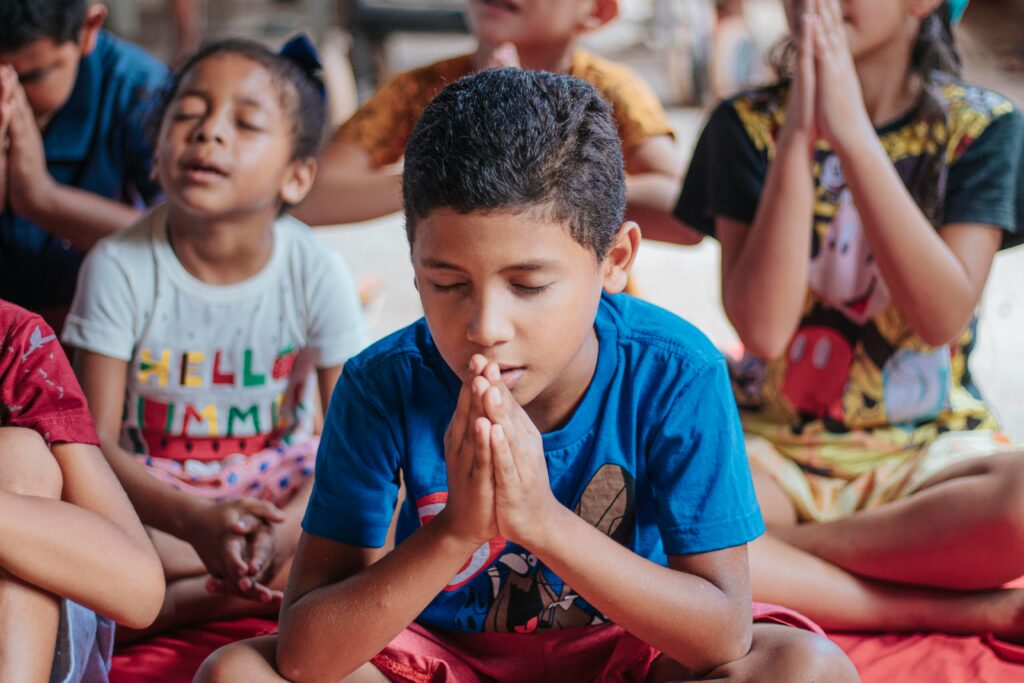
Those children were on the march on the side of immorality and crime. This was their inevitable future—but a word came to Robert Raikes’ mind: “Try!” Every step he took appeared to say it: “Try!” Every opening and closing door repeated it: “Try!” And he did try, and God blessed him.
Perhaps you say, “I do not know whether I can do it. I am not sure it could happen.”
I would say to you: “Try! Try! Try!”
We may have little equipment and only one person willing to help. But if that is all we see, we are missing God—the God who spoke and the stars came into existence; who breathed upon the Red Sea and divided it; who knows every star by name.

That God knows every boy and girl living around our churches and chapels. He knows them by name, and he knows us. He desires that those who possess the truth of the glorious Gospel should take it to those who do not yet have it.
Can the God who created the world help us begin and sustain a Sunday School? The answer is obvious. We must not measure ourselves against the world, nor measure the task by our own strength. God is greater than every obstacle we face, and he has told us to go forward by faith.
May God help us.

This article has been adapted and abridged from an address given by James Zenker at the Metropolitan Tabernacle School of Theology, 2015.