









Joseph Hall’s Contemplations . Daily Devotions
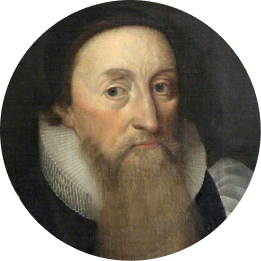
Bishop Joseph Hall (1574 – 1656) was a prolific writer, penning many volumes of devotional works as well as poetry and satire. His Contemplations on the Historical Passages of the Old and New Testaments provide rich devotional material as he meditates on the work of Creation, the Fall, and the providence of God revealed through His dealings with His people.
Day 1 . Tuesday
Creation out of Nothing and the Wonder of Light
Genesis 1.1
In the beginning God created the heavens and the earth.
What can I see, O God, in Your creation, but miracles of wonders? You made something out of nothing; and from that something you made all things. You, who were without a beginning, gave a beginning to time, and to the world within time.
We men can give form to matter, and this is to our praise. But You brought into being matter without form; then gave form to that matter; and then gave glory to that form.
At the height of our skill we may be able to craft something small and imperfect, following a pattern laid down for us. But to make something that never was—of which there was no pattern or example, to which there was no inclination, in which there was no possibility of what it should be—this belonged only to a power such as Yours: the infinite power of an infinite Creator.
With us, not so much as a thought can arise without some matter; but with You, all matter arises from nothing.
How easy is it for You to redeem all things, who could thus create all out of nothing! How can we distrust You, when you have thus proved Yourself omnipotent?
To have made the least handful of earth out of nothing is far more wonderful than to multiply an already-created world. And now the matter praises Your power, and the form praises Your wisdom. What beauty is here! What order! What order in the working, what beauty in the work!
You might have made all the world perfect in an instant, but You did not. That will, which caused You to create, is reason enough why You chose to do so. We should be similarly deliberate in our actions, which are so subject to imperfection, since it pleased Your infinite perfection to take leisure—though not out of need.
Neither was Your wisdom evident only in the time it took You to create, but in the degrees by which You created all things.
At first, You made nothing complete. First You made things which have being without life. Then You made that which has life and being. And lastly You made those things which have being, life, and reason. So we ourselves, in the ordinary course of life, first live the life of growth, then of sense, and afterwards of reason.
How foolish we are, to expect to be complete all at once! Having this example, it is well for us to rise to our full state through many steps, and in the proper time.
Genesis 1:3
And God said, Let there be light. And there was light.
You, God, made heaven and earth at a word; but what was the heaven without light? How confused, how formless! Like a goodly body without a soul, or a soul without You.
You are light, and in You is no darkness. Oh, how incomprehensibly glorious is the light that is in You!
Even one glimpse of the created light gave such a lively glory to all Your workmanship. The created light even the brute creatures can behold; Your light, not even the angels can look upon. Your light shines only in the higher world of immortality; the created light shines in the lowest part of Your creation.
There is one cause of our darkness on earth, and of utter darkness in hell—the absence of Your light. Shine, O God, into the deepest parts of my soul, and in Your light I shall see light.
But, O God, from where was that first light? The sun was not made until the fourth day; yet light came first. If man had been there, he might have seen everything bright; but he could not have seen its source.
It is as when we see a pond full of water, but do not see the springs from which it rises. You made light without the sun, and before the sun, so that light might depend upon You, and not upon Your creation.
Your power is not limited by means. It was easy for You to make a heaven without a sun, light without a heaven, day without a sun, time without a day. It is fitting that You should be Lord of Your own works. All means serve You. Why then do we, weak as we are, distrust You in the absence of those means, which You can either command or withhold?
How plainly You teach us that we need not one another, so long as we have You. One day we shall have light again without the sun. You shall be our sun; Your presence shall be our light. Light is sown for the righteous. The sun and its light belong to this lower world; Yours belongs to what is above. You give light to the sun, and the sun gives it to the world. But the light You will give us shall make us shine like the sun in glory.
For three days this light was spread throughout the heavens; then You gathered it into one body, the sun. Before the sun was made, the whole heaven was as our sun. Now one star holds that light for heaven and earth.
How You delight in gathering things of one kind to a single head and centre. So the waters were gathered into one place, the sea. So the upper waters were separated from the lower. So heavy things fall downward, and light things rise upward. So the scattered light was gathered into one sun. And so You will one day gather Your people from every place into one shared glory.
Why then are our thoughts and affections scattered—from You, from Your saints, from Your Anointed? Oh let this light, which You have spread abroad in the hearts of Your people, be gathered into You. We are like the heavens in their first imperfection. Be You our sun, to which our light may be drawn.
Yet this light You have mixed with darkness, though You might easily have made it constant. Even the best things, if unchanging, grow wearisome. There is nothing but Yourself in which there is no satiety. So pleasing is change, that even things less worthy, when alternating, may give more contentment than the constant presence of better things. The day fades into night, and rises again into morning, so that we might not expect lasting stability here, but continual change.
With You above, it is always day; night belongs only to our mortal state. Why are we not here, in spirit, as we shall be hereafter? Since You have made us children of light, teach us to walk in that light, and not in error or unbelief.
Day 2 – Wednesday
The Beauty and Order of Heaven
Genesis 1:16
He made the stars also.
In this enlightened frame of Yours, how fittingly and wisely are all things arranged. The order of creation answers both its matter and its form. Above is purity; below, the dregs. The higher we rise, the greater the perfection. Each level surpasses the one below, not more in place than in dignity. By these steps of increasing perfection, our thoughts may climb to the highest glory, and learn that Your heavenly realm is far more glorious than anything we see here. How poor is this world, compared to our true home.
Let my soul follow the pattern of Your working. When we describe a man, we begin not at the feet, but at the head. The crown of Your creation is the heaven—how high, how spacious, how glorious. It is a wonder that we can look up to such heights without being overcome.
Some have calculated that it would take five hundred years1 to reach the stars. I do not judge their reasoning. I marvel rather at Yours, which has drawn so vast a circle around this small earth. By simple measure, the circumference must far exceed the height.
We think an island large, yet the earth itself seems immeasurable. If we were in heaven, the whole earth would appear as small to us as the least star does now—and even that is not the smallest. How many vast empty spaces lie beyond the stars. The greatness of Your work, O God, scarcely falls short of its majesty.
But oh, what a glorious heaven You have spread above us! With what a precious vault You have enclosed this lower world. What worlds of light You have set beyond our sight. What we see is wondrous; what we do not see is greater still. You show us these visible things to give us a glimpse of what lies beyond. How fitting are Your works to Yourself. Kings do not build cottages, but display their greatness in magnificent structures; so have You done, O King of Glory.
If the lowest part of heaven is so glorious, what shall we think of the higher parts unseen? And if this sun of Yours is so bright, what must be the glory of its Maker? If other stars were brought as near, they too would seem like suns to us; their distance only increases our wonder. And if such a sky is given even for the use of those who oppose You, how blessed must those eternal dwellings be which You have prepared for Your own.
In this great structure I see three levels: the lowest heaven for birds, vapour, and weather; the second for the stars; the third for Your angels and saints.
The first is open to all; the second is like the body of a temple, filled with light; the third is the holy place. The first is full of movement and change; the second, of order and rest; the third, of glory and joy. We feel the first, we see the second, we believe the third. True happiness is only in the highest heaven, where You dwell, and where Your people enjoy You. It is Your presence that makes heaven to be heaven. Even now, by faith, Your people begin to experience it.
Genesis 1:6
And God said, Let there be a firmament in the midst of the waters, and let it divide the waters from the waters.
Let us descend from the heights of heaven to the lower region, which we know better. Even here, there is wonder. Your clouds hold water like delicate vessels. They hang, though heavy with their load. Why they remain, and why they fall, we do not know.
At one time, You make them like vast reservoirs of water; at another, like furnaces, sending lightning across the earth. From water, You bring fire; from thin vapour, solid hail. At other times, they reflect the sun in colours it does not possess.
There are streams of light, falling stars, flashes across the sky, strange shapes, circles around the moon, snow, and hail. In all this, we see Your hand, though we cannot fully understand Your work. There are winds we hear and feel, yet cannot see. We do not know where they come from or where they go; You alone know.
There are birds of every kind—varied in shape, colour, and nature. Compared with the heavens above, where things are constant, here there is endless variety. Why is this? Is it because we delight in change, and You in constancy? Or because, in these things, You display both Your skill and their imperfection?
There is no variation in what is perfect, because perfection is one. The nearer we come to unity, the nearer we come to perfection.
If we go down to the sea, the great deep, we find further wonders. The sea roars and swells as if it would swallow the earth. Yet You restrain it. Its motion and its stillness are alike mysterious. Great creatures, like living mountains, move through its depths. In number, size, shape, and variety, the waters surpass both land and air.
I say nothing of the treasures hidden within the earth and sea. They are hidden so that we might not seek them too eagerly, and placed low so that we might not value them too highly. Even without them, the earth itself offers endless wonders—plants, trees, seeds, creatures of every kind. In all these, we see the marks of a divine hand. The One who made the angels and stars has also made the smallest creatures.
O God, the heart of man is too narrow to admire even what lies beneath his feet. What shall we say to You, Maker of all these things? O Lord, how wonderful are Your works. In wisdom You have made them all.
You spoke, and they came into being. Your will is Your word, and Your word is Your deed. In us, thought, speech, and action are separate; in You, they are one. You needed no tools, no help. Nothing could be added to the Infinite. Your power remains the same. Speak, and my soul will be made new. Speak, and my body will be raised from dust.
All things obey You, O Lord. Why then do I not yield to Your word? For I must, like all Your creatures, obey Your command.
1 Bishop Hall was writing in the 17th century; we now know that it would take vastly longer. The Voyager probes, for example, would take roughly 70,000 years to reach Proxima Centuri, our nearest star.
Day 3 – Thursday
In the Image of God
Bible Reading: Genesis chapter 1 verses 26–31
Genesis 1: 27
So God created man in his own image, in the image of God created he him.
BUT, O God, what a little Lord have You made over this great world! The least corn of sand is not so small to the whole earth, as man is to the heaven. When I see the heavens, the sun, moon, and stars, O God, what is man! Who would think You should make all these creatures for one, and that one well near the least of all?
Yet none but he can see what You have done; none but he can admire and adore You in what he sees. How much he ought to do nothing but this, since he alone must do it!
Certainly, the price and virtue of things consist not in their quantity. One diamond is worth more than many quarries of stone; one loadstone has more virtue than mountains of earth.
It is lawful for us to praise You in ourselves. All Your creation has not more wonder in it than one of us. Other creatures You made by a simple command; man, not without a divine consultation. Others at once; man You first formed, then inspired. Others in several shapes, like none but themselves; man, after Your own image. Others with qualities fit for service; man, for dominion. Man had his name from You; they had their names from man. How should we be consecrated to You above all others, since You have bestowed more cost on us than others!
What shall I admire first? Your providence in the time of our creation, or Your power and wisdom in the act?
First, You made the great house of the world, and furnished it; then You brought in Your tenant to possess it. The bare walls had been too good for us, but Your love was above our desert. You, who made the earth ready for us before we were, have by the same mercy prepared a place in heaven for us while we are on earth.
The stage was first fully prepared; then man was brought forth into it, as an actor or spectator, that he might be neither idle nor discontent. Behold, You had prepared an earth for use, and heaven for contemplation.
After You had drawn that large, real map of the world, You thus abridged it into this little table of man. He alone consists of heaven and earth, soul and body.
Even this earthly part, which is vile in comparison with the other, as it is Yours, O God, I dare admire; though I can neglect it as my own.
For lo, this heap of earth has an outward reference to heaven. Other creatures grovel down to their earth, and have all their senses intent upon it; this is reared up towards heaven, and has no more power to look beside heaven than to tread beside the earth.
Unto this, every part has its wonder.
The head is nearest to heaven, as in place, so in resemblance; both for roundness of figure, and for those divine guests which have their seat in it. There dwell those majestical powers of reason, which make a man. All the senses, as they have their origin from thence, so they all agree there to manifest their virtue.
How goodly are the proportions You have set in the face! Though oftentimes we can give no reason why they please, yet they transport us to admiration.
What living glasses are those which You have placed in the midst of this visage, whereby all distant objects are clearly represented to the mind! And because their tenderness lies open to dangers, how have You defended them with hollow bones, prominent brows, and lids. And lest they should be too much bent on what they ought not, You have given them peculiar nerves to pull them up towards the seat of their rest.
What a tongue have You given him, the instrument not of taste only, but of speech! How sweet and excellent voices are formed by that little loose film of flesh! What incredible strength have You given to the weak bones of the jaws!
What a comely and tower-like neck; therefore most sinewy, because smallest! And lest I be infinite, what able arms and active hands have You framed him with, whereby he can frame all things to his own conceit!
In every part, beauty, strength, and convenience meet together. Neither is there any part whereof our weakness cannot give reason why it should be no otherwise. How have You disposed all the inward vessels, for all the offices of life: nourishment, egestion, generation!
No vein, sinew, or artery is idle. There is no piece in this exquisite frame whereof the place, use, and form do not admit wonder, and exceed it.
Yet if this body be compared to the soul, what is it but as a clay wall that encompasses a treasure; as a wooden box of a jeweller; as a coarse case to a rich instrument; or as a mask to a beautiful face?
Man was made last, because he was worthiest. The soul was inspired last, because yet more noble. If the body has this honour, to be the companion of the soul, yet withal it is the drudge. If it be the instrument, yet it is also the clog of that divine part: the companion for life, the drudge for service, the instrument for action, the clog in respect of contemplation.
These external works are effected by it; the internal works, which are more noble, are hindered by it. It is contrary to the bird, which sings most in her cage, but flies most and highest at liberty.
This my soul teaches me of itself: that it cannot conceive how capable, how active it is. It can pass by her nimble thoughts from heaven to earth in a moment. It can be all things, can comprehend all things, know that which is, and conceive that which never was, nor ever shall be.
Nothing can fill it, but You who are infinite; nothing can limit it, but You who are everywhere.
Day 4 – Friday
The Soul’s True Companion
Bible Reading: Genesis chapter 2 verses 7–25
Genesis 2: 7
And the LORD God formed man of the dust of the ground, and breathed into his nostrils the breath of life; and man became a living soul.
O God, who made it, replenish it, possess it, dwell in it, which You have appointed to dwell in clay.
The body was made of earth common to his fellows; the soul was inspired immediately from God. The body lay senseless upon the earth like itself. The breath of life gave it what it is; and that breath was from You. Sense, motion, and reason were infused into it at once.
From whence, then, was this quickening breath? No air, no earth, no water was here used to give help to this work. You, who breathed upon man and gave him the Holy Spirit, did also breathe upon the body and gave it a living spirit. We are beholden to nothing but You for our soul.
Our flesh is from flesh, our spirit is from the God of Spirits. How our souls should rise up to You, and fix themselves in their thoughts upon You, who alone created them in their infusion, and infused them in their creation! How they should long to return to the Fountain of their being, and Author of glorious being!
Why may we not say that this soul, as it came from You, so it is like You? As You are, so it is: one, immaterial, immortal, understanding spirit, distinguished into three powers which all make up one spirit. So You, the wise Creator of all things, would have some things to resemble their Creator.
These other creatures are all body; man is body and spirit. The angels are all spirit, not without a kind of spiritual composition. You alone are, after Your own manner, simple, glorious, infinite. No creature can be like You in Your proper being, because it is a creature. How should our finite, weak, compounded nature give any perfect resemblance of Yours?
Yet, of all visible creatures, You vouchsafe man the nearest correspondence to You: not so much in the natural faculties, as in those divine graces wherewith You beautify his soul.
Our knowledge, holiness, and righteousness were like the first copy from which they were drawn. Behold, we were not more like You in these, than now we are unlike ourselves in their loss.
O God, we now praise ourselves to our shame; for the better we were, the worse we are. We are as the sons of some prodigal or tainted ancestors, telling of the lands and lordships which were once theirs.
Only do You whet our desires according to the readiness of Your mercies, that we may redeem what we have lost, and recover in You what we have lost in ourselves. The fault shall be ours if our damage prove not beneficial.
I do not find that man, thus framed, found the want of a helper. His fruition of God gave him fulness of contentment. The sweetness which he found in the contemplation of this new workmanship, and the glory of the Author, so took him up that he had neither leisure nor cause for complaint.
If man had craved a helper, he had grudged at the condition of his creation, and had questioned that which he had: perfection of being. But He who gave him his being, and knew him better than himself, thinks of giving him comfort in the creature, whilst he sought none but in his Maker. He sees our wants, and forecasts our relief, when we think ourselves too happy to complain. How ready will He be to help our necessities, who thus provides for our perfection!
God gives the nature to His creatures; man must give the name. He that might see they were made for him, they shall be to him what he will. Instead of their first homage, they are presented to their new lord, and must see of whom they hold.
He that was so careful of man’s sovereignty in his innocency, how can He be careless of his safety in his renovation!
If God had given them their names, it would not have been so great a praise of Adam’s memory to recall them, as it was now of his judgement, at first sight, to impose them. He saw the inside of all the creatures at first; his posterity sees but their skins ever since; and by his knowledge he fitted their names to their dispositions.
All that he saw were fit to be his servants; none to be his companions. The same God that finds the want supplies it.
Rather than man’s innocency should lack an outward comfort, God will begin a new creation: not out of the earth, which was the matter of man; not out of the inferior creatures, which were the servants of man; but out of himself, for dearness, for equality.
Doubtless such was man’s power of obedience, that if God had bidden him yield up his rib, waking, for his use, he would have done it cheerfully. But the bounty of God was so absolute that He would not so much as consult with man’s will to make him happy. As man knew not while he was made, so shall he not know while his other self is made out of him, that the comfort might be greater, being seen before it was expected.
If the woman had been made not without the pain or will of the man, she might have been upbraided with her dependence and obligation. Now she owes nothing but to her Creator: the rib of Adam sleeping can challenge no more of her than the earth can of him.
It was a happy change to Adam, of a rib for a helper. What help did that bone give to his side? God had not made it if it had been superfluous; and yet, if man could not have been perfect without it, it had not been taken out.
Many things are useful and convenient which are not necessary. And if God had seen man might not want it, how easy had it been for Him, who made the woman of that bone, to turn the flesh into another bone! But He saw man could not complain of the want of that bone, which He had so multiplied, so animated.
O God, we can never be losers by Your changes. We have nothing but what is Yours. Take from us Your own, when You will; we are sure You cannot but give us better.
Day 5 – Saturday
Paradise
Bible Reading: Genesis chapter 2, verse 8 to chapter 3, verse 24
Genesis 2:8
And the LORD God planted a garden eastward in Eden; and there he put the man whom he had formed.
Man could no sooner see, than he saw himself happy. His eyesight and reason were both perfect at once, and the objects of both were able to make him as happy as he would. When he first opened his eyes, he saw heaven above him, earth under him, the creatures about him, God before him. He knew what all these things meant, as if he had long been acquainted with them all.
He saw the heavens glorious, but far off. His Maker thought it requisite to fit him with a paradise nearer home. If God had appointed him immediately to heaven, his body had been superfluous. It was fit that his body should be answered with an earthly image of that heaven which was for his soul. Had man been made only for contemplation, it would have served as well for him to have been placed in some vast desert, or on the top of some barren mountain. But the same power which gave him a heart to meditate, gave him hands to work, and work fit for his hands.
Neither was it the purpose of the Creator that man should merely live. Pleasure may stand with innocence. He that rejoiced to see all He had made to be good, rejoices to see all that He had made to be well. God loves to see His creatures happy. Our lawful delight is His. They know not God who think to please Him by making themselves miserable. The idolaters thought it a fit service for Baal to cut and lance themselves. Never did any holy man look for thanks from the true God by wronging himself.
Very earth was not fit for Adam – but a garden; a paradise.
What excellent pleasures, and rare varieties, have men found in gardens planted by the hands of men! And yet all the world of men cannot make one twig, or leaf, or spire of grass. When He that made the matter undertakes the fashioning of it, how must it needs be, beyond our capacity, excellent! No herb, no flower, no tree, was wanting there that might be for ornament or use; whether for sight, or for scent, or for taste. The bounty of God reached further than necessity, even to comfort and recreation. Why are we niggardly to ourselves, when God is liberal? But, for all this, if God had not there conversed with man, no abundance could have made him blessed.
Yet behold: that which was man’s storehouse was also his workhouse. His pleasure was his task. Paradise served not only to feed his senses, but to exercise his hands. If happiness had consisted in doing nothing, man would not have been employed. All his delights could not have made him happy in an idle life.
Man, therefore, is no sooner made, than he is set to work. Neither greatness nor perfection can privilege a folded hand. He must labour, because he was happy; how much more we, that we may be! This first labour of his was, as without necessity, so without pain, without weariness. The more cheerfully we go about our businesses, the nearer we come to our paradise.
Neither did these trees afford him only action for his hands, but instruction to his heart. For here he saw God’s sacraments grow before him. All other trees had a natural use; these two in the midst of the garden, a spiritual use. Life is the act of the soul; knowledge, the life of the soul. The tree of knowledge and the tree of life, then, were ordained as earthly helps to the spiritual part. Perhaps He who ordained the end, immortality of life, appointed this fruit as the means of that life.
It is not for us to enquire after the life we had, and the means we should have had. I am sure it served to nourish the soul by a lively representation of that living tree whose fruit is eternal life, and whose leaves serve to heal the nations.
O infinite mercy! Man saw his Saviour before him, ere he had need of a Saviour. He saw in whom he should recover a heavenly life, ere he lost the earthly. But after he had tasted of the tree of knowledge, he might not taste of the tree of life. That immortal food was not for a mortal stomach. Yet then did he most savour that invisible tree of life, when he was most restrained from the other.
O Saviour, none but a sinner can relish You. My taste has been enough seasoned with the forbidden fruit to make it capable of Your sweetness. Sharpen also the stomach of my soul by repenting and believing. So shall I eat, and, in spite of Adam, live for ever.
The one tree was for confirmation; the other for trial. One showed him what life he should have; the other what knowledge he should not desire to have. Alas! he that knew all other things, knew not this one thing: that he knew enough. How divine a thing is knowledge, whereof even innocence itself is ambitious!
Satan knew what he did. If this bait had been gold, or honour, or pleasure, man would have contemned it. Who can hope to avoid error, when even man’s perfection is mistaken? He looked for speculative knowledge, when he should have looked for experimental. He thought it good to know evil. Good was large enough to have perfected his knowledge, and therein his blessedness.
All that God made was good, and the Maker of them much more good; they good in their kinds, He good in Himself. It would not content man to know God and His creatures. His curiosity affected to know that which God never made: the evil of sin, and the evil of death, which indeed he himself made by desiring to know them.
Now we know evil well enough, and smart from knowing it. How dear this lesson has cost us: that, in some cases, it is better to be ignorant. Yet do the sons of Eve inherit this saucy appetite of their grandmother. How many thousand souls miscarry through the presumptuous affectation of forbidden knowledge!
O God, You have revealed more than we can know, enough to make us happy. Teach me a sober knowledge, and a contented ignorance.
Paradise was made for man, yet there I see the serpent. What marvel is it if my corruption finds the serpent in my closet, at my table, in my bed, when our holy parents found him in the midst of paradise? No sooner has he entered, than he tempts. He can no more be idle than harmless.
I do not see him at any other tree. He knew there was no danger in the rest. I see him at the forbidden tree. How true a serpent he is in every point: in his insinuation into the place; in his choice of the tree; in his assault upon the woman; in his plausibleness of speech to avoid terror; in his question to move doubt; in his reply to work distrust; in his protestation of safety; in his suggestion of envy and discontent; in his promise of gain!
And if he were so cunning at the first, what shall we think of him now, after so many thousand years’ experience? Only You, O God, and those angels that see Your face, are wiser than he.
I do not ask why, when he left his goodness, You did not bereave him of his skill. Still You would have him an angel, though an evil one, and You know how to ordain his craft to Your own glory. I do not desire You to abate his subtlety, but to make me wise. Let me beg it without presumption: make me wiser than Adam.
Even Your image, which he bore, made him not, through his own weakness, wise enough to obey You. You offered him all fruits, and restrained but one. Satan offered him but one, and restrained not the rest. When he chose rather to be at Satan’s feeding than Yours, it was just with You to turn him out of Your gates with a curse. Why should You feed a rebel at Your own board?
And yet we transgress daily, and You do not shut heaven against us. How is it that we find more mercy than our forefather? His strength was worthy of severity; our weakness finds pity.
That God, from whose face he fled in the garden, now made him with shame flee out of the garden. Those angels that should have kept him, now kept the gates of paradise against him. It is not so easy to recover happiness, as to keep it, or lose it. Yes, the same cause that drove man from paradise has also withdrawn paradise from the world.
That fiery sword did not defend it against those waters with which the sins of men drowned the glory of that place. Neither now do I care to seek where that paradise was, which we lost. I know where that paradise is, which we must care to seek, and hope to find.
As man was the image of God, so that earthly paradise was an image of heaven. Both the images are defaced; both the first patterns are eternal. Adam was in the first, and stayed not. In the second is the second Adam, who said, “This day shall you be with Me in paradise.” There was that chosen vessel, who heard and saw what could not be expressed. By how much the third heaven exceeds the richest earth, so much does that paradise, to which we aspire, exceed that which we have lost.
Day 6 – Sunday
Cain and Abel
Bible Reading: Genesis chapter 4, verses 1–16
Genesis 4:10
And he said, What hast thou done? the voice of thy brother’s blood crieth unto me from the ground.
Look now, O my soul, upon the first two brothers, perhaps twins, and wonder at their contrary dispositions and estates. If the privileges of nature had been worth anything, the firstborn child should not have been a reprobate.
Now, that we may ascribe all to free grace, the elder is a murderer, the younger a saint. Though goodness may be repaired in ourselves, it cannot be propagated to our children.
Now Adam might see the image of himself in Cain, for he begot him after his own image: Adam slew his posterity; Cain, his brother. We are too like one another in that wherein we are unlike God. Even the clearest grain sends forth the chaff from which it was winnowed before sowing.
Yet this Cain is a ‘possession’. The same Eve who mistook the fruit of the garden mistook also the fruit of her own body; her hope deceived her in both. So many good names are ill bestowed, and our hopeful expectations in earthly things often disappoint us.
Doubtless their education was holy; for Adam, though in Paradise he could not be innocent, was nevertheless a good man outside Paradise. His sin and fall had now made him circumspect; and since he saw that his act had bereaved them of that image of God which he once possessed for them, he could not but labour, by all holy endeavours, to repair it in them, so that his care might make amends for his trespass.
How plain it is that even good upbringing cannot alter destiny! ‘That which is crooked cannot be made straight.’
Who would think that brothers—and only two brothers—should not love each other? Dispersed love grows weak, and fewness of objects usually unites affections. If only two brothers are left alive out of many, they think that the love of all the rest should survive in them; and now the beams of their affection are so much the hotter because they reflect directly upon each other.
Yet behold, here are only two brothers in the world, and one is the butcher of the other.
Who can wonder at dissensions among thousands of brothers when he sees such deadly opposition between two, the first roots of brotherhood? Who can hope to live peaceably and securely among so many Cains when he sees one Cain bring about the death of one Abel?
The same devil who set enmity between man and God sets enmity between man and man. And yet God said, ‘I will put enmity between your seed and her seed.’ Our hatred of the serpent and his seed is from God; their hatred of the holy seed is from the serpent.
Behold here at once, in one person, the seed of the woman and of the serpent: Cain’s natural parts are of the woman, his vicious qualities of the serpent. The woman gave him to be a brother; the serpent, to be a man-slayer.
All uncharitableness and all quarrels are of one author. We cannot entertain wrath and not give place to the devil. Certainly, so deadly an act must be deeply grounded.
What, then, was the occasion of this deadly malice? Abel’s sacrifice is accepted: what was this to Cain? Cain’s is rejected: what could Abel do about this?
Oh, envy—the corrosive of all evil minds and the root of all desperate actions! The same cause that moved Satan to tempt the first man to destroy himself and his posterity moves the second man to destroy the third.
It should have been Cain’s joy to see his brother accepted; it should have been his sorrow to see that he himself had deserved rejection. His brother’s example should have stirred and directed him.
Could Abel have prevented God’s fire from descending? Or should he, if he could, reject God’s acceptance and displease his Maker to content a brother? Was Cain any further from a blessing because his brother obtained mercy?
How proud and foolish is malice, which grows so mad for no other cause than that God or Abel is not less good! It has long been a happy danger to be holy. In morally indifferent actions, we must take care to avoid offence; but I care not what devil or what Cain is angry that I do good or receive good.
There has never been any nature without envy. Every man is born a Cain, hating that goodness in another which he neglects in himself. There has never been envy that was not bloody; for if it does not eat another’s heart, it will eat our own.
Unless it is restrained, it will surely feed itself with the blood of others—often in act, always in affection. And that God who, in good, accepts the will for the deed condemns the will for the deed in evil. If there is an evil heart, there will be an evil eye; and if both these, there will be an evil hand.
How early martyrdom came into the world! The first man who died, died for religion. Who dares measure God’s love by outward events when he sees wicked Cain standing over bleeding Abel, whose sacrifice was first accepted and who is now himself sacrificed?
Death was denounced to man as a curse; yet behold, it first lights upon a saint. How soon it was altered by the mercy of that just hand which inflicted it! If death were evil and life good, Cain would have been slain and Abel would have survived. Now that it begins with him whom God loves, ‘O death, where is your sting?’
Abel says nothing; his blood cries. Every drop of innocent blood has a tongue and is not only vocal but importunate.
What a noise, then, did the blood of my Saviour make in Heaven! He was Himself the shepherd and the sacrifice, the man who was offered and the God to whom He was offered. The Spirit who heard both says, ‘It spoke better things than the blood of Abel.’
Abel’s blood called for revenge; His, for mercy. Abel’s pleaded his own innocence; His, the satisfaction made for all the believing world. Abel’s procured Cain’s punishment; His freed all repentant souls from punishment.
Better things indeed than the blood of Abel; better—and therefore that which Abel’s blood said was good. It is good that God should be avenged upon sinners. The execution of justice upon offenders is no less good than the reward of goodness.
No sooner does Abel’s blood speak to God than God speaks to Cain. There is no wicked man to whom God does not speak—if not to his ear, then to his heart.
What speech was this? Not an accusation, but an inquiry; yet such an inquiry as would imply an accusation. God loves to have a sinner accuse himself, and therefore He has set His deputy in the breast of man. Yet nature abhors this as much as God loves it.
Cain answers stubbornly. The very name of Abel wounds him no less than his hand had wounded Abel. Consciences that are without remorse are not without horror: wickedness makes men desperate. The murderer is angry with God—as he was lately for accepting his brother’s offering, so he is now for listening to his blood.
And now he dares answer God with a question: ‘Am I my brother’s keeper?’—where he should have said, ‘Am I not my brother’s murderer?’ Behold, he scorns to keep him whom he did not fear to kill. Good duties are base and troublesome to wicked minds, while even the violence of evil is pleasant.
Yet this miscreant, who had neither grace to avoid his sin nor grace to confess it, now that he is convicted of sin and cursed for it—how he howls, how he exclaims! He who cares nothing for the act of his sin will care for the pain of his punishment. The damned are weary of their torments, but in vain. What great madness it is to complain too late!
He who would not keep his brother is cast out from the protection of God. He who did not fear to kill his brother now fears that whoever meets him will kill him.
The troubled conscience imagines fearful things, and sin makes even cruel men cowardly. God saw it was too much favour for him to die; He therefore wills what Cain wills. Cain would live; it is granted to him, but as a curse.
How often God hears sinners in anger! He shall live banished from God, carrying his hell in his bosom and the mark of God’s vengeance on his forehead. God rejects him, the earth repines at him, men abhor him. He now wishes for the death he feared, and no man dares oblige him with a murder.
How bitter is the end of sin—indeed, without end! Still Cain finds that he killed himself more than his brother. We should never sin if our foresight were only as good as our sense; the outcome of sin would appear a thousand times more horrible than the act is pleasant..
Day 7 – Monday
The Ark of Salvation
Bible Reading: Genesis chapter 6, verses 1–22
Genesis 6:5
And GOD saw that the wickedness of man was great in the earth, and that every imagination of the thoughts of his heart was only evil continually.
The world had grown so foul with sin that God saw it was time to wash it with a flood. Wickedness clung so closely to its authors that, when they were washed to nothing, it still would not come off. Indeed, it had sunk so deep into the very grain of the earth that God saw fit to let it soak long under the waters.
So, under the law, the very vessels that had touched unclean water had to be either rinsed or broken. Mankind began with only one; and yet he who saw the first man lived to see the earth peopled with a world of men.
Yet men did not grow so fast as wickedness. One man could soon and easily multiply a thousand sins; never did a man have so many children. Thus, when there were enough men to fill the earth, there were enough sins to reach up to Heaven; whereupon the waters came down from Heaven and swelled up to Heaven again.
If there had not been so deep a deluge of sin, there would have been no deluge of waters. From where, then, came this abundance of iniquity? From where but the unequal yoke with unbelievers? These marriages did not produce men so much as wickedness. Through them, religious husbands both lost their piety and gained a rebellious and godless generation.
That which was the first occasion of sin was the occasion of its increase. A woman seduced Adam; women betrayed these sons of God. The beauty of the apple betrayed the woman; the beauty of these women betrayed this holy seed. Eve saw and lusted; so did they.
This also was forbidden fruit: they lusted, tasted, sinned and died. Most sins begin at the eyes; by them Satan commonly creeps into the heart. That soul can never be safe which has not made a covenant with its eyes.
God need not have given these men any warning of His judgement: they gave Him no warning of their sins, and no respite. Yet, that God might demonstrate His mercy even to the wicked, He gave them a hundred and twenty years in which to repent.
How reluctant God is to strike, when He threatens for so long! He who delights in revenge surprises his adversary, whereas he who gives long warnings desires to be prevented. If we were not wilful, we should never suffer.
Nor does He give them time only, but also a faithful teacher. It is a happy thing when he who teaches others is righteous. Noah’s hand taught them as much as his tongue. His work in building the ark was a real sermon to the world, in which mercy and life were taught to the believer, and destruction to the rebellious.
I seem to see those monstrous sons of Lamech coming to Noah and asking what he means by that strange work—whether he means to sail upon dry land. When he reports God’s purpose and his own, they go away laughing at his idleness and tell one another, in sport, that too much holiness has made him mad.
Yet, for all their mockery, they cannot shake Noah’s faith. He preaches, builds and finishes. Doubtless, more hands than his went into this work. Many worked upon the ark who were not saved in it. Our outward works cannot save us without faith: we may help to save others and perish ourselves.
What a wonder of mercy I see here! One poor family is called out of a world—eight grains of corn, as it were, winnowed from a whole barnful of chaff. One hypocrite was saved with the rest for Noah’s sake; not one righteous man was swept away for company.
For these few, the earth was preserved beneath the waters, and all kinds of creatures upon the waters, which otherwise would all have been destroyed. The world still stands for the sake of those for whom it was preserved; otherwise, fire would consume that which could not be cleansed by water.
This difference is strange. I see the most savage of all creatures—lions, tigers and bears—come by an instinct from God to seek the ark, as we see swine foreseeing a storm run home crying for shelter. Men I do not see. Reason, once debauched, is worse than brutishness.
God has use even for these fierce and cruel beasts, and gains glory by them. Even they, being created for man, must live by him, though to his punishment. How gently they offer and submit themselves to their preserver, renewing that obedience to this repairer of the world which, before sin, they yielded to him who first stocked the world!
He who shut them into the ark when they had entered also shut their mouths while they entered. The lions fawn upon Noah and Daniel. What heart can their Maker not soften?
God would have the unclean beasts live, and the clean multiply; therefore He sent Noah seven of the clean and two of the unclean. He knew that the multitude of the one would annoy man, while the other would enrich him. Those things are worthy of the most respect which are of the most use.
But why seven? Surely the God who created seven days in the week, and made one for Himself, preserved one of every seven clean beasts for Himself, for sacrifice. He gives us six for one in earthly things, so that in spiritual things we should be wholly His.
Day 8 – Tuesday
Preserved Through Judgement
Bible Reading: Genesis chapter 7, verse 11, to chapter 8, verse 19
Genesis 8:1
And God remembered Noah, and every living thing, and all the cattle that was with him in the ark: and God made a wind to pass over the earth, and the waters asswaged;
Now the day has come: all the guests have entered, the ark is shut and the windows of Heaven are opened. I do not doubt that many of those scoffers, when they saw the violence of the waves descending and ascending according to Noah’s prediction, came wading waist-deep to the ark and urgently begged for the admission they had once refused.
But now, as they had formerly rejected God, so they are justly rejected by God. Before vengeance begins, repentance is timely; but once judgement has gone out, we cry too late. While the Gospel appeals to us, the doors of the ark are open. If we neglect the time of grace, we shall seek it in vain with tears. God considers it no mercy to pity the obstinate.
Others, bolder than they, hope to outrun the judgement. Climbing up to the high mountains, they look down upon the waters with more hope than fear. When they see their hills become islands, they climb into the tallest trees.
There, pale and horrified, they at once look for death and devise ways to avoid it; at last the waves overtake them, half-dead with famine and half with fear. Behold, from the tops of the mountains they glimpse the ark floating upon the waters, and look with envy upon that which they formerly regarded with scorn.
In vain does he flee whom God pursues. There is no way to flee from His judgements but to flee to His mercy through repentance. The faith of the righteous cannot be so greatly derided as their success is magnified.
How securely Noah rides out this uproar of heaven, earth and waters! He hears the rain pouring down above his head; the shrieking of men and the roaring and bellowing of beasts on both sides of him; and the raging and threats of the waves beneath him.
He sees the miserable devices of the distressed unbelievers and, meanwhile, sits quietly in his dry cabin, neither feeling nor fearing evil. He knew that He who owned the waters would steer him, and that He who shut him in would preserve him.
What a happy thing is faith! What quiet safety, what heavenly peace it works in the soul amid all the inundations of evil!
Now, when God has taken back all the life which He had given to His unworthy creatures, and reduced the world to its first form, in which waters covered the face of the earth, it was time for a renewal of all things to follow this destruction. To have continued the deluge for long would have been to punish righteous Noah.
After forty days, therefore, the heavens clear; after a hundred and fifty, the waters sink. How soon God wearies of punishing, He who never wearies of blessing! Yet the ark may not rest suddenly. If we did not remain for a while under God’s hand, we should not know how sweet His mercy is or how great our thankfulness should be.
The ark, though Noah’s fortress against the waters, was also his prison: he was safe in it, but confined. He who gave him life by it now thinks it time to give him liberty out of it.
God does not reveal all things to His best servants. Behold, He told Noah a hundred and twenty years beforehand on what day he should enter the ark, yet does not now tell him on what day the ark will rest upon the hills and he will go out.
Noah therefore sends out his scouts, the raven and the dove, whose wings in that misty air might easily discover more than his sight could. The raven had a keen sense of smell, a coarse diet and a tough constitution; no bird was so fit for discovery. Yet the most likely means do not always succeed.
It will neither venture far into that solitary world for fear of want, nor return to the ark for love of liberty, but hovers about in uncertainty. How many carnal minds fly out of the ark of God’s Church and embrace the present world, choosing to feed upon the unsavoury carcasses of sinful pleasures rather than be restrained within the narrow bounds of Christian obedience!
The dove is sent out, a bird both swift and simple. Like a true citizen of the ark, she returns and gives faithful notice: by her restless and empty return, of the continuance of the waters; by her olive leaf, of their abatement. How worthy of welcome are those messengers who, with innocence in their lives, bring glad tidings of peace and salvation in their mouths!
Noah rejoices and believes, yet still he waits seven days more. It is not good to devour the favours of God too greedily, but to take them in so that we may digest them. O strong faith of Noah, not wearied by this delay!
Some men would have so longed for the open air, after such long confinement, that at the first news of safety they would have uncovered and left the ark. Noah waits seven days before he will open it, and nearly two months before he will forsake it; and not even then until God, who commanded him to enter, tells him to depart.
There is no good action without faith, and no faith without a word. Happy is the man who, in all things—neglecting the counsels of flesh and blood—depends upon the commission of his Maker.
Day 9 – Wednesday
Noah’s Altar and Shame
Bible Reading: Genesis chapter 8, verse 20, to chapter 9, verse 29
Genesis chapter 9, verse 23
And Shem and Japheth took a garment, and laid it upon both their shoulders, and went backward, and covered the nakedness of their father; and their faces were backward, and they saw not their father’s nakedness.
No sooner has Noah come out of the ark than he builds an altar—not a house for himself, but an altar to the Lord. Our faith will always teach us to prefer God to ourselves; delayed thankfulness is not worthy of acceptance.
Of those few creatures that are left, God must have some. They are all His; yet His goodness will have man know that it was he for whose sake they were preserved.
It was a privilege to those very brute creatures that they were saved from the waters to be offered up in fire to God. What a favour it is to men to be spared from common destruction, that they may be sacrificed to their Maker and Redeemer!
Behold, this little fire of Noah, through the virtue of his faith, purged the world. It ascended into those heavens from which the waters fell and caused a glorious rainbow to appear there for his assurance.
All the sins of the former world were not so unsavoury to God as this smoke was pleasant. No perfume can be as sweet as the holy obedience of the faithful.
Now God, who was previously offended by the foul savour of sin, smells a sweet savour of rest. Behold here a new and second rest. First God rested from making the world; now He rests from destroying it.
Even while we do not cease to offend, He ceases from public vengeance. His word was enough; yet with it He gives a sign which may declare the truth of His promise to the very eyes of men.
He still does this in His blessed sacraments, which are like visible words to the soul. The rainbow is the pledge of our safety, naturally signifying the end of a shower. All the signs of God’s institution are fitting and significant.
But who, after all this, would expect to find righteous Noah, the father of the new world, lying drunk in his tent? Who could think that wine would overthrow him who was preserved from the waters? Or that he who could not be tainted by the sinful examples of the former world would set the first example of a new sin of his own?
What are we men, if left to ourselves? While God upholds us, no temptation can move us; when He leaves us, no temptation is too weak to overthrow us.
What living man ever had such noble proofs of the mercy and justice of God—mercy upon himself, justice upon others? What man received such gracious approval from his Maker?
Behold, he of whom God said in an unclean world, ‘You alone have I found righteous,’ now proves unclean when the world has been purged. The preacher of righteousness to the former age—the king, priest and prophet of the renewed world—is the first to renew the sins of that world which he had reproved and had seen condemned for sin.
God’s best children have no defence against sins of infirmity. Which of the saints has not once done that of which he is ashamed?
God, who allows us to fall, knows how to make as good use of the sins of His holy ones as of their obedience. If we did not have such examples, who could help but despair at the sight of his own sins?
Yet we find Noah drunk only once. One act can no more make a good heart unrighteous than a habitual course of sin can coexist with regeneration.
But when I look at the effect of this sin, I cannot help but blush and wonder. Behold, this sin is worse than sin: other sins arouse shame but hide it; this one displays it to the world. No sooner had Adam sinned than he saw and abhorred his own nakedness, seeking to hide it even with bushes.
Noah had no sooner sinned than he exposed his nakedness, and had not enough command of himself even to be ashamed. One hour’s drunkenness reveals that which more than six hundred years of sobriety had modestly concealed.
He who gives himself to wine is not his own. What shall we think of this vice, which robs a man of himself and puts a beast in his place?
Noah’s nakedness is seen in wine. It is no unusual quality of this excess to disclose secrets. Drunkenness both creates imperfections and shows to others those we already have.
God would have it so, that we might be doubly ashamed: both of those weaknesses which we reveal and of the weakness which moved us to reveal them.
Noah is uncovered, but in the midst of his own tent. It would have been sinful though no man had seen it. Unknown sins have their guilt and shame, and are justly attended by known punishments.
Ungracious Ham saw it and laughed. His father’s shame should have been his own; the deformity of those parts from which he had his being should have produced in him a secret horror and dejection. How many graceless men make sport of the causes of their humiliation!
Twice Noah had given Ham life; yet neither the name of father and preserver, nor age, nor virtue, could shield him from the contempt of his own son.
I see that even God’s ark may nourish monsters. Some filthy toads may lie under the stones of the temple; God preserves some men for judgement. It would have been better for Ham to perish in the waters than to live under his father’s curse.
Not content to witness this shameful sight, Ham goes on to proclaim it. Sin does evil in the eye, but worse in the tongue.
As all sin is a work of darkness, so it should be buried in darkness. The reporting of sin is often as evil as its commission, for it can never be blazoned abroad without uncharitableness, and seldom without spreading infection.
Oh, the unnatural and more than Ham-like impiety of those sons who rejoice to publish the nakedness of their spiritual fathers, even to their enemies!
Yet it was well for Noah that Ham could tell it to none but his own family—and those family members were gracious and dutiful sons. Our shame is less if none know our faults but our friends.
Behold how love covers sins! These good sons are so far from going forward to see their father’s shame that they go backwards to hide it.
The cloak is laid upon both their shoulders; they both walk backwards with equal steps and dare not even look behind them, lest they should unwillingly see the cause of their shame. They would rather risk stumbling over their father’s body than see his nakedness.
How it grieved them to think that they who had so often approached their holy father with reverence must now, in reverence, turn their backs upon him; and that they must now clothe him in pity, who had so often clothed them in love!
And, adding still more to their duty, they covered him and said nothing. This modest sorrow is their praise and our example.
We must hear of the sins of those whom we love and honour with indignation; believe them fearfully and unwillingly; acknowledge them with grief and shame; hide them with honest excuses; and bury them in silence.
How equally God regards both piety and disobedience! Because Ham sinned against his father, he will be punished in his children. Japheth is dutiful to his father and finds the reward of it in his posterity.
Because Ham was an evil son to his father, his sons will be servants to his brothers. Because Japheth set his shoulder beside Shem’s to bear the cloak of shame, Japheth will dwell in the tents of Shem, sharing with him in blessing as he shared in duty.
When we do only what we ought, God is nevertheless thankful to us and rewards that which we would sin if we failed to do. Who could ever show me a man rebelliously undutiful to his parents who has prospered in himself and in his descendants?
Day 10 – Thursday
The Tower of Pride
Bible Reading: Genesis chapter 11, verses 1–9
Genesis 11:4
And they said, Go to, let us build us a city and a tower, whose top may reach unto heaven; and let us make us a name, lest we be scattered abroad upon the face of the whole earth.
How soon men and sins multiply! Within one hundred years, the world is as full of both as if there had been no deluge. Though men could not but see the fearful monuments of their ancestors’ ruin, how quickly they had forgotten the flood!
Good Noah lived to see the world both populous and wicked again. Doubtless, he often regretted having preserved some whom he saw carry the vices of the former world into the renewed one. It could not but grieve him to see the destroyed giants revive from his own body, and to see those of his flesh and blood tyrannise over one another.
In his sight, Nimrod cast off the awe of his holy grandfather, grew imperious and cruel, and made servants of his own kinsmen. How easy it is for a great spirit to become the head of a faction, when even brothers will stoop to servitude!
And now, when men combine together, evil and presumptuous impulses find encouragement in numbers, and each man takes pride in seeming foremost. We are more cheerful in doing good when we have the assistance of company; much more so in sinning, because we are more inclined to evil than to good.
It was a proud declaration: ‘Come, let us build ourselves a city and a tower whose top may reach to Heaven.’
They had newly come down from the hills to the plains, and now they thought of raising a hill of buildings upon the plain. When their tents were pitched upon the mountains of Armenia, they were as near to Heaven as their tower could make them. But their ambition must aspire to a height of their own raising.
Pride is always discontented and continually seeks matter for boasting in her own works.
How foolishly men reckon without God: ‘Come, let us build’—as if there were no obstacle but their own will; as if both earth and time were theirs. All natural men still build Babel, planning their own designs so resolutely as though there were no power to overrule them.
It is just with God that peremptory determinations seldom prosper, whereas those things which are undertaken fearfully and modestly commonly succeed.
‘Let us build ourselves a city.’ If they had taken God with them, it would have been commendable. The establishment of societies is pleasing to Him who is the God of order.
But a tower whose top might reach to Heaven was shameful arrogance and impious presumption. Who would think that we little ants, creeping upon the earth, should dream of climbing to Heaven by multiplying earth?
Pride always looks to the highest. The first man would know as God; these men would dwell as God. Covetousness and ambition know no limits.
And what if they had reached Heaven? Some hills are as high as they could hope to build, yet they are none the better for it. No place alters the condition of nature. An angel is glorious though he is upon earth, and man is but earth though he is above the clouds.
The nearer they had been to Heaven, the more exposed they would have been to the violence of heaven—to thunder, lightning and those other higher fires. What would this have been but to thrust themselves into the hands of the avenger of all wicked insolence?
God loves Heaven to be looked towards and desired with all humble longings, with the holy ambitions of faith—not with proud imaginations of our own achievements.
But why was all this done? Not because they loved being near Heaven so much as being famous upon earth. It was not advantage that was sought here, nor safety, but glory.
Where does the thirst for fame not carry men, whether in good or evil? It makes them seek to climb to Heaven; it makes them unafraid to run headlong down to hell. Even in the best things, the desire for praise competes with conscience and boasts of having more followers.
One builds a temple to Diana in hope of glory, intending it to be one of the great wonders of the world; another burns it in hope of fame. Rare is the man who does not have some Babel of his own, upon which he bestows labour and expense merely to be talked about.
If they had done better things for a vainglorious purpose, their act would have been accursed. If they had built houses to God, sacrificed, prayed and lived well, the intention would have poisoned the action. But now both the act and the purpose are equally vain, and the outcome is as vain as either.
God has a special indignation against pride above all sins, and will oppose our endeavours—not because they are evil in themselves (what harm could there be in laying one brick upon another?), but because they are proudly undertaken.
He could have prevented the laying of the first stone and could just as easily have made the foundation trench the builders’ grave. But He loves to see what wicked men would do, and to let fools run themselves out of breath.
What monument would they have had to their own madness and His powerful interruption if the wall had risen to no height?
To stop them in the midst of their course, He interferes not with their hands or their feet, but with their tongues: not by pulling them out, loosening their strings or making them say nothing, but by teaching them to say too much.
Nothing is altered but the sound of letters; yet even this frustrates the work and makes fools of the workmen. How easy it is for God, in ten thousand ways, to correct and thwart the greatest projects of men! He who taught Adam the first words taught them words that had never been spoken.
One calls for brick; the other looks him in the face, wonders what he commands and why he speaks words never heard before, and brings him mortar instead—returning an answer just as little understood.
Each quarrels with the other, expressing his anger so that only he himself can understand it. From anger they turn to quiet entreaties, but still with the same success.
At first, every man thinks his companion is mocking him; but when they perceive that this confusion is real, their only answer is silence and cessation.
They could not gather together, for no man could call them in words that would be understood. Even if they had assembled, nothing could be determined, because one could never grasp another’s purpose.
They could not even have the honour of a general dismissal; instead, each man leaves his trowel and station more of a fool than when he began. Thus actions begun in glory commonly end in shame.
All outward actions depend upon the tongue. No man can know another’s mind if the tongue is not its interpreter. Hence, as many tongues were given to stop the building of Babel, so many were given to build the new Jerusalem, the evangelical Church.
How dearly Babel has cost the whole world!
At first, when there was only one language, men spent their time upon the arts. This was necessary in the first settling of the world, and so the arts came early to perfection.
But now, of necessity, we spend so long upon the shell of languages that we scarcely have time to chew the sweet kernel of knowledge. Surely men would have grown too proud if there had been no Babel. It often happens that one sin is the remedy for a greater.
The division of tongues must inevitably hinder any work.
A multiplicity of languages would not have been given by the Holy Spirit as a blessing to the Church if the world had not first been afflicted with a multiplicity of languages as punishment.
Hence the building of our Zion rises no faster, because our tongues are divided. Happy would the Church of God be if we all spoke one language! While we differ, we can build nothing but Babel. The difference of tongues caused their Babel to cease, but it builds ours.
Day 11 – Friday
Abraham’s Faith Under Trial
Bible Reading: Genesis chapter 12, verses 1–9
Genesis 12:4
So Abram departed, as the LORD had spoken unto him; and Lot went with him: and Abram was seventy and five years old when he departed out of Haran.
It was fitting that he who was to be the father and pattern of the faithful should be thoroughly tried; for in a model copy every fault is important and may become a rule of error. Of the ten trials through which Abraham passed, the last was the hardest.
No son of Abraham can hope to escape temptations when he sees that bosom, in which he desires to rest, so assaulted with difficulties.
Abraham must leave his country and kindred and live among strangers. The calling of God never leaves men where it finds them. The earth is the Lord’s, and all places are alike to the wise and faithful. If Chaldea had not been grossly idolatrous, Abraham would not have left; no bond must tie us to the danger of infection.
But where must he go? To a place he did not know, among men who did not know him. It is comfort enough to a good man, wherever he is, that he is acquainted with God. We are never out of our way while we follow the calling of God.
No man ever lost by obedience to the Highest. Because Abraham yielded, God gave him possession of Canaan.
I wonder more at his faith in taking this possession than in leaving his own country. Behold, Abraham takes possession for seed which he did not yet have and which, by nature, he was unlikely to have.
He takes possession of a land of which he himself would not own one foot, and in which his seed would not be settled until nearly five hundred years later. The power of faith can anticipate time and make future things present.
If we are the true sons of Abraham, we already possess our land of promise while we sojourn here on earth. While we seek our country, we have it.
Yet even Canaan does not afford him bread, though he must believe it will flow with milk and honey for his descendants. Sense must yield to faith. Woe to us if we must judge our future estate by the present! Egypt gives relief to Abraham when Canaan cannot. In outward things, God’s enemies may fare better than His friends.
Three times Egypt preserved the Church of God: in Abraham, in Jacob and in Christ. God often makes use of the world for the benefit of His own, though without any thanks from the world.
Conversely, He uses the wicked as scourges against His own inheritance and afterwards burns them, because in serving His good purpose they intended evil.
But what a change is this! Until now Sarah has been Abraham’s wife; now Egypt has made her his sister. Fear has turned him from a husband into a brother. No strength of faith can exclude all doubts.
God has said, ‘I will make you a great nation’; Abraham says, ‘The Egyptians will kill me.’ He who lived by his faith nevertheless shrinks and sins. How vainly we hope to believe without any fear, and to live without infirmities! Small blemishes of unbelief cannot destroy the praise and power of faith.
Abraham believed, and it was credited to him as righteousness. He who, through rashness, twice doubted the preservation of his own life did not doubt the life of his descendants, even from the dead and barren womb of Sarah.
Yet it was more difficult for his posterity to live in Sarah than for Sarah’s husband to live in Egypt. This was above nature, yet he believed it. Sometimes the believer falters at easy trials, yet breaks through the greatest temptations without fear.
Abraham was old before this promise and hope of a son, and the older he grew, the less capable he became; yet God made him wait twenty-five years for fulfilment. No time is long to faith, which has learned to defer its hopes without fainting or weariness.
Abraham heard this news from the angel and laughed; Sarah heard it and laughed. They agreed more in their action than in their disposition. Abraham laughed for joy; Sarah, from distrust. Abraham laughed because he believed it would be so; Sarah, because she believed it could not be so.
The same act varies according to the manner of doing it and the intention of the doer.
Yet Sarah laughed only within herself, and she was found out. How God can discover us in our secret sins! How easily she must now have thought that He who could know of her inward laughter could know of her conception! And now she who laughed and did not believe both believes and fears.
What a lively picture I see in Abraham and Sarah of strong faith and weak: strong in Abraham, weak in Sarah! She, seeking to make good God’s word to Abraham and knowing her own barrenness, substitutes Hagar and, in her desire for offspring, persuades him to polygamy.
Abraham would never have looked to obtain the promise through any womb other than the barren one if his own wife had not urged him to take another.
When our own apparent means fail, weak faith is driven to expedients and devises strange schemes of its own to attain the end. Sarah would rather have a child through another womb than be childless. When she hears of an impossibility to nature, she doubts, yet hides her distrust; and when she must believe, she fears because she had distrusted.
Abraham hears and believes, expects and rejoices. He does not say, ‘I am old and weak; Sarah is old and barren. Where are the many nations that shall come from these withered bodies?’ It is enough for him that God has said it.
He does not see the means; he sees the promise. He knew that God would sooner raise up descendants for him from the very stones beneath his feet than allow him to lack a large and happy posterity.
Faith is not exercised where there are visible means or natural hopes. Difficulties and impossibilities are the true objects of belief. Therefore God enlarges Abraham’s name to match that which He will bring from his body, making his name as ample as his posterity.
No man ever lost by believing; faith is always recompensed with glory.
Nor is Abraham content only to wait for God, but also to suffer for Him. God commands him to cut his own flesh; he willingly sacrifices this portion of his skin and blood to Him who owns it all.
How glad he is to carry this painful mark of the love of his Creator! How ready he is to seal with blood this covenant between God and himself, not regarding the soreness of his body in comparison with the confirmation of his soul. The wound was not as grievous as its significance was comforting.
For in this he saw that from his body would come that blessed seed which would purge his soul from all corruption. Well lost is that part of us which may give assurance of the salvation of the whole.
Our faith is not yet sound if it has not taught us to disregard pain for God, and to love His sacraments more than our own flesh.
Day 12 – Saturday
Abraham Offers His Son
Bible Reading: Genesis chapter 22, verses 1–10
Genesis 22:2
And he said, Take now thy son, thine only son Isaac, whom thou lovest, and get thee into the land of Moriah; and offer him there for a burnt offering upon one of the mountains which I will tell thee of.
But all these are only easy tasks of faith. All ages have stood amazed at the next, not knowing whether they should wonder more at God’s command or Abraham’s obedience. For many years that good patriarch had waited for his Isaac; now at last he had joyfully received him, and with this gracious proclamation: ‘In Isaac your seed shall be called, and all nations blessed.’
Behold, the son of his old age, the son of his love, the son of his expectation—he who might not endure a mock from his brother—must now endure the knife of his father: ‘Take your only son Isaac, whom you love, go to the land of Moriah and offer him there as a burnt offering.’
No gold was ever tried in so hot a fire. Who but Abraham would not have protested to God? What! Does the God of mercies now begin to delight in blood? Is it possible that murder should become piety? Or, if You insist upon taking pleasure in a human sacrifice, is none but Isaac fit for Your altar, and none but Abraham to offer him? Shall these hands destroy the fruit of my own body? Can I not be faithful unless I am unnatural? Or, if I must be the monster of all parents, will Ishmael not be accepted?
O God, where is Your mercy? Where is Your justice? Have You given me only one son, and must I now slay him? Why did I wait so long for him? Why did You give him to me? Why did You promise me a blessing in him? What will the heathen say when they hear of this infamous massacre? How can Your name and my profession escape perpetual blasphemy?
With what face shall I look upon my wife Sarah, whose son I have murdered? How will she receive the executioner of Isaac? Or who will believe that I did this at Your command? How will all the world not spit at this holy cruelty and say, ‘There goes the man who cut the throat of his own son’?
Yet if he were an ungodly or rebellious child, his deserts might give some colour to this violence. But to lay hands upon so dear, dutiful and promising a son admits no excuse. But grant that You, who are the God of nature, may either alter or set nature aside: what shall I say of the truth of Your promises? Can Your justice admit contradictions? Can Your decrees be changeable? Can You promise and disappoint?
Can these two things stand together: Isaac shall live to be the father of nations, and Isaac shall now die by the hand of his father? Once Isaac is gone, where is my seed? Where is my blessing? O God, if Your commands and purposes are capable of alteration, alter this bloody sentence and let Your first word stand.
These would have been the thoughts of a weak heart. But God knew that He spoke to an Abraham, and Abraham knew that he had to do with God. Faith had taught him not to argue, but to obey. With holy resolve, he either forgets nature or disregards her. He is sure that what God commands is good and what He promises is infallible; therefore he is careless about the means and trusts to the end.
In the matters of God, whoever consults with flesh and blood will never offer up his Isaac to God. There is no need of a counsellor when we know that God is the commander. Here there is neither reluctance, deliberation nor delay. His faith would not allow him even to be sorry for what he must do.
Sarah herself may not know of God’s charge and her husband’s purpose, lest her affection should overcome her faith; lest her weakness, grown importunate, should say, ‘Disobey God, and die.’ That which Abraham must do, he will do. He who has learned not to regard the life of his son has learned not to regard the sorrow of his wife. It is excessive tenderness to heed the judgements and interpretations of others when we have a direct word from God.
The good patriarch rises early and prepares for his sad journey. Now he must travel three whole days towards this execution, with Isaac continually before his eyes. All the while, he seems to see him bleeding upon the pile of wood which he carries.
There is nothing so miserable as to live under the expectation of a great evil. Misery which must come is mitigated by speed and aggravated by delay. Throughout this time, if Abraham had repented, he had opportunity to return. There is no small trial even in the very duration of a trial.
Now, when they have come within sight of the chosen mountain, the servants are dismissed. What devotion is this, which will permit no witnesses! Abraham will not allow two of his own servants to see him do that which, soon afterwards, all the world must know he has done.
Yet he is not ashamed of that piety which onlookers could not see without horror and resistance, and which no ear could hear of without abhorrence. What stranger could have endured to see the father carry the knife and fire—the instruments of that death which he would rather suffer than inflict—and the son safely carrying the burden which must soon support him?
But if Abraham’s heart had known how to relent, the question of his dear, innocent and devout son would have melted it into compassion: ‘My father, behold the fire and the wood, but where is the sacrifice?’
I do not know whether those words, ‘My father,’ did not strike Abraham as deeply as Abraham’s knife could strike his son. Yet he does not even think: O miserable man, who may not at once be a son to such a God and a father to such a son! Still he persists and conceals; and, where he did not intend it, prophesies: ‘My son, God will provide a lamb for the burnt offering.’
The heavy news was reluctant to come forth. It was death to Abraham to say what he must do. He knows the strength of his own faith to perform this act; he does not know the strength of Isaac’s faith to endure it. But now, when Isaac has helped to build the altar upon which he must be consumed, he hears—not without astonishment—the strange command of God and the final will of his father:
My son, you are the lamb which God has provided for this burnt offering. If my blood could have excused you, I would a thousand times rather have given you my own life than taken yours. Alas! I am full of days and have long lived only in you. You might have preserved the life of your father and comforted his death; but the God of us both has chosen you. He who gave you to me miraculously commands me, by an unusual means, to return you to Him.
I need not tell you that I sacrifice all my worldly joys—indeed, myself—in you. But God must be obeyed, and you are not too dear for Him who calls you. Come, my son: restore the life which God has given you through me. Offer yourself willingly to these flames; send up your soul cheerfully to your glory; and know that God loves you above others, since He requires you alone to be consecrated in sacrifice to Himself.
Day 13 – Sunday
The Lord Will Provide
Bible Reading: Genesis chapter 22, verses 9–19
Genesis 22:12
And he said, Lay not thine hand upon the lad, neither do thou any thing unto him: for now I know that thou fearest God, seeing thou hast not withheld thy son, thine only son from me.
Who cannot imagine with what perplexing mixture of passions, with what changes of countenance, doubts, fears and amazement, good Isaac received this sudden message from his father’s mouth? How he questioned, how he pleaded! But when he had somewhat digested his thoughts and considered that the author was God, the actor Abraham and the action a sacrifice, he showed himself to be the son of Abraham.
Now Isaac encourages his father’s trembling hand and strives with him for the praise of readiness and obedience. He offers his hands and feet to the cords, his throat to the knife and his body to the altar. Growing ambitious for the sword and fire, he entreats his father to do that which Abraham would have done even if Isaac had tried to dissuade him.
O holy emulation of faith! O blessed agreement between the sacrificer and the offering! Abraham is as ready to take as Isaac is to give. He binds those dear hands, which are bound more tightly by the cords of duty and resolution. He lays his sacrifice upon the wood, already burning inwardly with the heavenly fire of zeal and devotion.
And now, having kissed him for the last time, not without mutual tears, Abraham lifts his hand to deliver the fatal stroke at once. He does not even think that perhaps God will relent after the first wound.
Now Abraham’s support, the hope of the Church, lies as if bleeding beneath a father’s hand. What heart can help but yearn at this spectacle? Which of the most savage heathen, had he been upon the hill of Moriah and seen through the bushes a father’s sword hanging over the throat of such a son, would not have been utterly perplexed?
Yet Abraham, whom it most nearly concerns, is least moved. Faith has produced in him that unmoved resolve which cruelty would produce in others. He disregards all fears and looks beyond all impossibilities. His heart tells him that the same hand which raised Isaac from Sarah’s dead womb can raise him again from the ashes of his sacrifice.
With this confidence, Abraham’s hand was now descending upon the throat of Isaac, who had given himself up for dead, when suddenly the angel of God interrupts him, forbids him and commends him. The voice of God was never so welcome, so sweet or so timely as now.
It was the trial that God intended, not the deed. Isaac is sacrificed and yet alive; and now both of them are happier in what they were willing to do than they could have been distressed if they had done it.
God’s commands are often harsh at the beginning and during their course, but always comforting in the conclusion. True spiritual comforts commonly come late and suddenly. God delays on purpose, that our trials may be complete, our deliverance welcome and our recompense glorious.
Isaac would never have been so precious to his father if he had not been recovered from death—if he had not been as miraculously restored as he was given. Abraham would never have been so blessed in his seed if he had not disregarded Isaac for God.
The only way to find comfort in an earthly thing is to surrender it, in faithful trust, into the hands of God. Abraham came to sacrifice; he may not go away with empty hands. God cannot endure that good purposes should be frustrated.
Lest Abraham should either fail to do that for which he came or lack the means of immediate thanksgiving for so gracious a deliverance, behold, a ram stands ready for the sacrifice and, as it were, offers itself for this happy exchange. He who made the beast brings it there and fastens it there. Even in small things there is great providence.
What mysteries there are in every act of God! The only Son of God, upon this very hill, is laid upon the altar of the cross and so becomes a true sacrifice for the world; yet He is raised unharmed and freed from the power of death.
The Lamb of God, who takes away the sins of the world, is here truly offered and accepted. One Saviour is portrayed in two figures: in the one dying, in the other restored.
Thus Abraham, while exercising his faith, confirms it. He rejoices more to foresee the true Isaac offered in that place to die for his sins than to see the earthly Isaac preserved from death as the reward of his faith.
Whatever is dearest to us upon earth is our Isaac. Happy are we if we can sacrifice it to God. Those who cannot sacrifice with Abraham shall never rest with Abraham.
Day 14 – Monday
Delivered from Sodom
Bible Reading: Genesis chapter 19, verses 1–14
Genesis 19:13
For we will destroy this place, because the cry of them is waxen great before the face of the LORD; and the LORD hath sent us to destroy it.
Before Abraham and Lot grew rich, they lived together; now their wealth separates them. Their fellowship was a greater good than their riches. Many a man is a loser through his wealth. Who would count those things good which make us worse?
It would have been the duty of young Lot to offer rather than choose, to yield rather than contend. Who would not think Abraham the nephew and Lot the uncle? It is no disgrace for the greater person to begin negotiations for peace. It better becomes every son of Abraham to prevail by love than to rule by power.
Abraham yields his right of choice; Lot takes it. And behold, Lot is thwarted in that which he chose, while Abraham is blessed in that which was left to him. God never allows any man to lose by humbly surrendering his right for the sake of peace.
Wealth has made Lot not only undutiful but covetous. He sees the good plains of Jordan, the richness of the soil, the benefit of the rivers and the situation of the cities; and now, without once enquiring into the character of the inhabitants, he falls in love with Sodom.
Outward appearances are deceitful guides to our judgement and affections. Those who value things merely as they appear deserve to be deceived.
Before long, Lot pays dearly for his rashness. He left his uncle seeking quietness and finds war among strangers. Now he is carried away as a prisoner, with all his possessions, by powerful enemies; Abraham, whom he forsook, must rescue him.
That wealth which caused his former quarrels becomes the prey of merciless heathen. That place which his eye covetously chose betrays his life and goods. How many Christians, while looking for gain, have lost themselves!
Yet this unhappy outcome has neither driven out Lot nor reformed Sodom. He still loves his advantage, and the Sodomites their sins. Wicked men grow worse under affliction, as water grows colder after being heated. As they do not cease sinning, so God does not cease punishing them, but follows them with a succession of judgements.
In how few years Sodom has forgotten that she was plundered and led captive! If that wicked city had been warned by the sword, it would have escaped the fire. But this visitation has not produced ten good men in those five cities. How fit for the fire was this heap which was all chaff!
Only Lot vexed his righteous soul with the sight of their uncleanness. He vexed his own soul—for who commanded him to remain there? Yet because he was vexed, he is delivered. He escapes the judgement of those whose sins he escaped.
Though Lot chose to be a guest of Sodom, because he would not entertain its sins he becomes a host to the angels. Even the good angels are the executioners of God’s judgement. There can be no better or nobler act than to execute justice upon obstinate evildoers. Who can be ashamed of that which was not unbecoming even to the angels of God?
Where should the angels lodge but with Lot? The houses of holy men are full of these heavenly spirits when their occupants do not know it. They pitch their tents in ours and visit us when we do not see; and when we do not feel it, they protect us. It is the honour of God’s saints to be attended by angels.
The filthy Sodomites now flock together, stirred by the fury of envy and lust. They dare to demand in a crowd that which would have been too abominable for one man to do, and unnatural even to imagine.
Continuance and companionship in evil make wicked men outrageous and shameless. It is not enough for Lot to be a witness; they would make him their pander also: ‘Bring out these men, that we may know them.’
Behold, even the Sodomites speak modestly, though their deeds and intentions are villainous. What a shame it is for those who profess purity of heart to speak filthily!
The good man begs and pleads the laws of hospitality; and when he sees their headstrong purpose for mischief, he chooses rather to be an evil father than an evil host. His intention was good, but his offer was wrong. If, through his permission, the Sodomites had defiled his daughters, it would have been his sin; if through violence they had defiled his guests, it would have been theirs alone.
There can be no warrant for us to sin lest others should sin. It is for God to prevent sins by judgements; it is not for men to prevent a greater sin with a lesser.
The best minds, when troubled, yield ill-considered impulses, as water violently stirred sends up bubbles. God intended better for Lot than to allow his weak offer to be accepted. Those who are bent upon villainy are further exasperated by dissuasion, as strong streams, when resisted by floodgates, swell over the banks.
Many a man is hardened by the good word of God and, instead of receiving the counsel, rages at the messenger. When men have come to such a state that they are no better for afflictions and worse for admonitions, God finds it time to strike.
Now Lot’s guests begin to show themselves as angels, and first deliver Lot in Sodom, then deliver him from Sodom. First they strike with blindness those whom they will afterwards consume with fire.
How little the Sodomites thought that vengeance was so near! While they grope in the street and curse those whom they cannot find, Lot is with the angels in secure light. He sees them miserable and foresees them burning.
It is God’s way to blind and stupefy those whom He means to destroy. The light they shall see will be fiery: it will be the beginning of everlasting darkness and an unquenchable fire. Now they have finished sinning, and God begins to judge. Wickedness has only a time; the punishment of wickedness is beyond all time.
The rest of the night was both short and dangerous. Yet good Lot, though sought by the Sodomites and only just pulled into his house by the angels, goes out to seek his sons-in-law. No good man would be saved alone. Faith makes us charitable despite every danger.
He warns them like a prophet and advises them like a father, but both in vain. He seems to them to be mocking, and they do more than seem to mock him in return.
Why should tomorrow differ from other days? Who has ever seen it rain fire, and from where should that brimstone come? Or, if such showers must fall, how will nothing burn but this valley?
Thus, to carnal men, preaching is foolishness, devotion is idleness, the prophets are madmen, and Paul a babbler. These men’s unbelief is as worthy of the fire as the others’ uncleanness. ‘He who does not believe is condemned already.’
Audio digitally generated, using the voice of Robert Aboagye. All rights reserved.