









Spurgeon on Romans . Daily Devotions
These devotional readings are largely taken from expository thoughts shared by Spurgeon at the end of his sermons. Going through a Bible passage verse by verse, he would make brief comments with his usual candour and practicality, applying the text directly to his hearers.
They have been collated from the Metropolitan Tabernacle Pulpit, and lightly edited for clarity and cohesion.
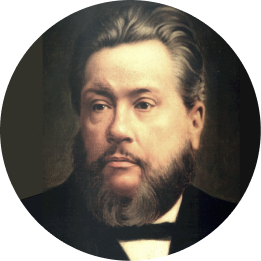
Day 1 . Tuesday
Romans chapter 1 verses 1-12
Verse 1. Paul, a servant of Jesus Christ, called to be an apostle, separated unto the gospel of God.
Paul had not seen the Romans when he wrote this epistle. They were strangers to him, and therefore, he begins by asserting his apostleship, “called to be an apostle, separated unto the gospel of God.” That expression should be true of every Christian minister. We are not apostles, but we are “separated unto the gospel of God.”
I do not think that we are called to have anything to do with party politics, or social problems, or any such questions; we are set apart for this purpose, “separated unto the gospel of God.” There are plenty of people who can attend to those things better than we can. If we mind our own business, or rather, if we mind our Master’s business, we who are ministers will have quite enough to do. “Separated unto the gospel of God.”
There are some brethren who in preaching are as timid as mice, but on a political platform they can roar like lions. Had not they better take to what they like best, and give up the work at which they are not at home? For my part, I believe that I am like Paul when he says that he was “separated unto the gospel of God.” I am set apart unto the Gospel, cut off from everything else that I may preach the glorious Gospel of the blessed God to the perishing sons of men.
Verse 2. Which he had promised afore by his prophets in the holy scriptures.
Notice, brethren, how reverent the apostles were to Holy Scripture. They had no doubt about its inspiration. They quoted the Old Testament, and delighted to make it a kind of basis for the New Testament, “which he had promised afore by his prophets in the holy scriptures.”
Verses 3-4. Concerning his Son Jesus Christ our Lord, which was made of the seed of David according to the flesh; and declared to be the Son of God with power, according to the spirit of holiness, by the resurrection from the dead.
What a glorious Lord we serve! He is God’s Son, “Jesus Christ our Lord.” In His human nature, he is a Man of royal race, “of the seed of David.” He was a man, therefore He died, but He rose again, for He was more than man, “declared to be the Son of God with power.”
Verses 5-6. By whom we have received grace and apostleship, for obedience to the faith among all nations, for his name: among whom are ye also the called of Jesus Christ:
That is a sweet name for every truly converted man, “called of Jesus Christ.” He has called you personally, He has called you effectually, He has called you out of the world, He has called you into fellowship with Himself, “the called of Jesus Christ.” The Revised Version has it, “called to be Jesus Christ’s.” Those who are called by Christ, are called to be His.
Verses 7-8. To all that be in Rome, beloved of God, called to be saints: Grace to you and peace from God our Father, and the Lord Jesus Christ. First, I thank my God through Jesus Christ for you all, that your faith is spoken of throughout the whole world.
What contrasts we have in the seventh verse! “In Rome, beloved of God.” “In Rome, called to be saints.” God has beloved ones in the darkest parts of the earth. There is all the more reason for them to be saints because they are surrounded by sinners. They must have had true faith, or they could not have confessed Christ between the jaws of a lion, for they lived in Rome, with Nero hunting after Christians as if they had been wild beasts, and yet they were not ashamed of the Gospel of Christ.
Verse 9. For God is my witness, whom I serve with my spirit in the gospel of his Son, that without ceasing I make mention of you always in my prayers;
This man Paul did a great deal by prayer. I remember a minister, who is now with the Lord, who was thanked by his people for his wonderful sermons, but he said to them, “You never thanked me for my prayers, yet they were the best part of my service for you.” When men of God are mighty in prayer, we owe much to them.
Verse 10. Making request, if by any means now at length I might have a prosperous journey by the will of God to come unto you.
Paul wanted to go to Rome, but I do not suppose that he ever thought that he would go there at the expense of the government, with an imperial guard to take care of him all the way. We pray, and God gives us thAe answer to our petitions, but often in a way in which we should never have dreamed. Paul goes to Rome as a prisoner for Christ’s sake.
Now suppose Paul had gone to Rome in any other capacity, he could not have seen Caesar, he could not have obtained admission into Caesar’s house. The prison of the Palatine was just under the vast palace of the Caesars, and everybody in the house could come into the guard room, and have a talk with Paul if they were minded so to do.
I suppose that whatever I might be willing to pay, I could not get to preach in the palace of the Queen, even in this nominally Christian country, but Paul was installed as a royal chaplain over Caesar’s household in the guard room of the Palatine prison. How wonderfully God works to accomplish His divine purposes!
Verses 11-12. For I long to see you, that I may impart unto you some spiritual gift, to the end ye may be established; that is, that I may be comforted together with you by the mutual faith of you and me.
Paul wanted his faith to establish theirs, and their faith to establish his. Christians grow rich by an exchange of spiritual commodities, and I am afraid some Christians are very poor because they do not engage in the spiritual bartering one with another.
You know how it was in the old time, “They that feared the LORD spake often one to another.” Shall I tell you how it is now? They that fear not the Lord speak often one against another. That is a very sad difference.
Oh, for more Christian communion, for when we blend our “mutual faith,” we are “comforted together,” each believer grows stronger as he cheers his brother in the Lord!
Amen.
Day 2 – Wednesday
Romans chapter 1 verses 13-25
Verse 13. Now I would not have you ignorant, brethren, that oftentimes I purposed to come unto you, (but was let hitherto,) that I might have some fruit among you also, even as among other Gentiles.
Ah! Paul, you could not go when you wished. Caesar must convoy you. Your Master would have you go to Rome under the protection of the eagles of the empire. God has servants everywhere, He can make Satan himself provide the bodyguard for His faithful apostle’s journey.
Verse 14. I am debtor both to the Greeks, and to the Barbarians; both to the wise, and to the unwise.
Paul felt a debt to everybody. The God who saved him had saved him that he might preach the Gospel in every place he could reach. Brethren, if you have received much from God, you are so much the debtor to men, and you are debtors not only to the respectable, but to the disreputable, debtors not only to those who come to a place of worship, but to the dwellers in the slums, “to the Greeks, and to the barbarians; to the wise and to the unwise.”
Verse 15. So, as much as in me is, I am ready to preach the gospel to you that are at Rome also. For I am not ashamed of the gospel of Jesus Christ:
Many other people were ashamed of the Gospel of Christ. It was too simple, it had not enough of mystery about it, it had not enough of worldly wisdom about it. Paul says, “I am not ashamed of the gospel of Christ,” and then he gives his reason for not being ashamed of it—
Verses 16-17. For it is the power of God unto salvation to every one that believeth; to the Jew first, and also to the Greek. For therein is the righteousness of God revealed from faith to faith: as it is written, The just shall live by faith.
The Gospel tells us about this living by faith, this believing, this receiving righteousness through believing, and not through working. This is the sweet story of the cross, of which Paul was not ashamed.
Verse 18. For the wrath of God is revealed from heaven against all ungodliness and unrighteousness of men, who hold the truth in unrighteousness;
Those last words may be read, “Who hold down the truth in unrighteousness.” They will not let the truth work upon their hearts, they will not allow it to operate in their minds, but they try to make it an excuse for their sin. Is there anybody here who is holding down the truth to prevent its entering his heart? I fear that there are some such persons who have come here for years, and the truth has pricked them, troubled them, made them lie awake at night, but they are holding it down, like one who grasps a wild animal by the ears and holds it down for fear it should bite him.
Oh, sirs, when you are afraid of the truth, you may well be afraid of hell! When you and the truth quarrel, you had better end your fighting soon, for you will have the worst of it if you do not yield, “For the wrath of God is revealed from heaven against all ungodliness and unrighteousness of men, who hold down the truth in unrighteousness.”
Verses 19-20. Because that which may be known of God is manifest in them; for God hath shewed it unto them. For the invisible things of him from the creation of the world are clearly seen, being understood by the things that are made, even his eternal power and Godhead; so that they are without excuse:
Men who never heard the Gospel can see God in His works if they open their eyes. There is written upon the face of nature enough to condemn men if they do not turn to God. There is a Gospel of the sea, of the heavens, of the stars and of the sun, and if men will not read it, they are guilty, for they are willfully ignorant of what they might know, and ought to know.
Verses 21-22. Because that, when they knew God, they glorified him not as God, neither were thankful; but became vain in their imaginations, and their foolish heart was darkened. Professing themselves to be wise, they became fools,—
The way to be a fool is to pretend to be wise. A short cut to wisdom is the confession of folly. The near way to folly is the profession of wisdom.
Verses 23-24. And changed the glory of the uncorruptible God into an image made like corruptible man, and to birds, and fourfooted beasts, and creeping things. Wherefore God also gave them up to uncleanness through the lust of their own hearts, to dishonour their own bodies between themselves:
It is very easy to make a beast of yourself when you have made a beast to be your god, as the Egyptians did when they worshipped the god that they had made in the form of an ox, or a crocodile, or a cat.
Verse 25. Who changed the truth of God into a lie, and worshipped and served the creature more than the Creator, who is blessed for ever. Amen.
There are many preachers who have “changed the truth of God into a lie,” and by their exaltation of man, they have “worshipped and served the creature more than the Creator, who is blessed for ever.”
God save all of us from such idolatry as that!
Amen.
Day 3 – Thursday
Romans chapter 2 verses 25-29; chapter 3 verses 1-27
Chapter 2 verse 25. For circumcision verily profiteth, if thou keep the law: if thou be a breaker of the law, thy circumcision is made uncircumcision.
Paul is dealing with the Jew, who was apt to think that he must have a preference beyond the Gentiles on account of his circumcision.
Verses 26–29. Therefore if the uncircumcision keep the righteousness of the law, shall not his uncircumcision be counted for circumcision? And shall not uncircumcision which is by nature, if it fulfil the law, judge thee, who by the letter and circumcision dost transgress the law? For he is not a Jew, which is one outwardly; neither is that circumcision, which is outward in the flesh: But he is a Jew, which is one inwardly; and circumcision is that of the heart, in the spirit, and not in the letter; whose praise is not of men, but of God.
If this principle were fully recognized everywhere, it would certainly put an end to all that notion of sacramentarianism which some men hold. It is not the outward, not the external, not the form and ceremony—it is the inward work of the Spirit—it is holiness and change of heart.
Let none of us ever fall into the gross error of those who imagine that there is attached to certain ceremonies a certain degree of grace. It is not so. He is not a Christian which is one outwardly—he is a Christian who is one inwardly.
Chapter 3 verses 1–2. What advantage then hath the Jew? or what profit is there of circumcision? Much every way: chiefly, because that unto them were committed the oracles of God.
The Jews of old had a great advantage, for they had the truth when other men had not. The voice of God spake to them clearly, when only here and there, to a few chosen ones beside, was the voice of God delivered at all.
The Jews were God’s chronicle-keepers. They had to guard the holy Books, “the Oracles of God.” They had also to preserve the knowledge of the truth by those divers rites and ceremonies by which God was pleased to reveal Himself of old time.
Verse 3. For what if some did not believe? shall their unbelief make the faith of God without effect?
It was a privilege to belong to the Jewish people, even though some, and many through their unbelief, did not avail themselves of the privilege.
Did He not after all bless the Jews though among them were unbelievers? Could it be that their unbelief would turn God from His purpose to bless the chosen people? Would their want of faith affect God’s faithfulness?
Verses 4–7. God forbid: yea, let God be true, every man a liar; as it is written, That thou mightest be justified in thy sayings, and mightest overcome when thou art judged. But if our unrighteousness commend the righteousness of God, what shall we say? Is God unrighteous who taketh vengeance? (I speak as a man.) God forbid: for then how shall God judge the world? For if the truth of God hath more abounded through my lie unto his glory; why yet am I also judged as a sinner?
However faithless men might be, God was still true and faithful.
Here is another objection—if it be so that, somehow or other, the sin of man is overruled to magnify the grace of God, why am I then blameworthy? But the apostle stamps this out as an evil suggestion and a very moral disease.
Paul spoke as a mere carnal man might be supposed to speak. If ever we are obliged, for the sake of argument, to ask a question which is almost blasphemous, let us do it very guardedly, and say something to show that we really do not adopt the language as our own, just as Paul says, “I speak as a man.” If the very sin of man is made to turn to the glory of God, is God unjust in punishing that sin?
God will judge the world, and He does judge the world even now. There are judgments against nations already executed, and recorded on the pages of history. If God were unjust, how could He judge the world?
If God has even turned the opposition of evil men to the establishment of His truth, as He has often done, why then are men punished for it? These are deep, dark questions, which come out of the proud heart of man, and Paul ventures to answer them.
Verses 8–11. And not rather, (as we be slanderously reported, and as some affirm that we say,) Let us do evil, that good may come? whose damnation is just. What then? are we better than they? No, in no wise: for we have before proved both Jews and Gentiles, that they are all under sin; As it is written, There is none righteous, no, not one: There is none that understandeth, there is none that seeketh after God.
We never said, we never even thought that we might do evil that good should come. Nay, if all the good in the world could come of a single evil action, we have no right to do it. We must never do evil with the hope of advancing God’s cause.
If God chooses to turn evil into good, as He often does, that is no reason why we should do evil, and it is no justification of sin.
The whole human race has sinned against the Most High and has become alienated in mind from the great and good Creator.
Verses 19–20. Now we know that what things soever the law saith, it saith to them who are under the law: that every mouth may be stopped, and all the world may become guilty before God. Therefore by the deeds of the law there shall no flesh be justified in his sight: for by the law is the knowledge of sin.
It is like a looking-glass that shows us our blots, but it does not wash them away. The law is the standard which shows us how short we are of God’s glory; it does not make up our shortcomings.
All the law does is to show us how sinful we are. The light can show us our sin, but it cannot take it away. The law proves that we are condemned, but it does not bring us our pardon.
It is a killing, not a saving thing. By the law, no man ever was, or ever will be saved. By the law, we guilty ones are condemned.
Verses 21–22. But now the righteousness of God without the law is manifested, being witnessed by the law and the prophets; Even the righteousness of God which is by faith of Jesus Christ unto all and upon all them that believe: for there is no difference:
No difference, first of all in the sin. We are all guilty and all condemned—no difference in the way of salvation.
We have no righteousness of our own, but God gives us a righteousness through faith in Christ, and He gives that to everyone who believes. Whoever believes in Jesus is justified by faith in Jesus—there is no difference.
Verses 23–27. For all have sinned, and come short of the glory of God; Being justified freely by his grace through the redemption that is in Christ Jesus: Whom God hath set forth to be a propitiation through faith in his blood, to declare his righteousness for the remission of sins that are past, through the forbearance of God; To declare, I say, at this time his righteousness: that he might be just, and the justifier of him which believeth in Jesus. Where is boasting then? It is excluded.
It is shut out. If men be saved not at all by works, altogether by the free grace of God through the merits of Christ, then boasting has the gate shut in its face.
There is no room for boasting in the heart that receives Christ. If a man were saved by works, he would have whereof to glory. But as salvation is all of grace, through faith in Christ, boasting is barred out, and faith gratefully ascribes all praise to God.
Amen.
Day 4 – Friday
Romans chapter 3 verses 9-31
Verses 9–10. What then? are we better than they? No, in no wise: for we have before proved both Jews and Gentiles, that they are all under sin; as it is written,—
Paul had already proved in the epistle that both Jews and Gentiles were guilty before God. Now he quotes a set of texts from Israel’s own holy Books, to show the universal depravity of men. Notice how he rings the changes on the words “all” and “none.”
Verses 10–12. There is none righteous, no, not one: there is none that understandeth, there is none that seeketh after God. They are all gone out of the way, they are together become unprofitable; there is none that doeth good, no, not one.
This is the character of all unregenerate men. It is a true description of the whole race of mankind, whether Jews or Gentiles. In their natural state, “there is none righteous… there is none that understandeth… there is none that seeketh after God… there is none that doeth good, no, not one.”
What can be more expressive? What can be more plain than this? The whole race estranged from God and given up to sin.
Verse 13. Their throat is an open sepulchre; with their tongues they have used deceit; the poison of asps is under their lips.
Paul does not use flattering words, as those preachers do who prate about the dignity of human nature. Man was a noble creature when he was made in the image of God, but sin blotted out all his dignity.
Verses 14–18. Whose mouth is full of cursing and bitterness: their feet are swift to shed blood: destruction and misery are in their ways: and the way of peace have they not known: there is no fear of God before their eyes.
Here is a description of all men. If some say, “Well, my feet were never swift to shed blood,” you probably have not been put into circumstances which would evoke that cruel passion. So we thought till lately—we thought we were all so civilized that we were to have no more war. Believe me, let the trumpet be sounded and cannon be heard, and there is a devil in our humanity which would not soon be awakened, and we, too, might become as fierce as any other nation. It is still true of men.
The Jews are comprehended here, for they were specially “under the law.” The whole chosen seed of Israel, highly privileged as they were, are described in these terrible words that we have been reading, which Paul quoted from their own sacred Books.
Verses 19–20. Now we know that what things soever the law saith, it saith to them who are under the law: that every mouth may be stopped, and all the world may become guilty before God. Therefore by the deeds of the law there shall no flesh be justified in his sight: for by the law is the knowledge of sin.
That is the true condition of the whole world, “guilty before God.” This is the right attitude for the whole human race, to stand with its finger on its lip, having nothing to say as to why it should not be condemned.
All the law does is to show us how sinful we are. Paul has been quoting from the sacred Scriptures, and truly, they shed a lurid light upon the condition of human nature. The light can show us our sin, but it cannot take it away.
The law of the Lord is like a looking glass. Now, a looking glass is a capital thing for finding out where the spots are on your face, but you cannot wash in a looking glass, you cannot get rid of the spots by looking in the glass. The law is intended to show a man how much he needs cleansing, but the law cannot cleanse him.
It is like a looking-glass that shows us our blots, but it does not wash them away. The law is the standard which shows us how short we are of God’s glory; it does not make up our shortcomings.
“By the law is the knowledge of sin.” The law proves that we are condemned, but it does not bring us our pardon.
It is a killing, not a saving thing. By the law, no man ever was, or ever will be saved. By the law, we guilty ones are condemned.
Verses 21–22. But now the righteousness of God without the law is manifested, being witnessed by the law and the prophets; even the righteousness of God which is by faith of Jesus Christ unto all and upon all them that believe: for there is no difference:
Whoever believes in Jesus is justified by faith in Jesus—there is no difference.
Verses 23–24. For all have sinned, and come short of the glory of God; Being justified freely by his grace through the redemption that is in Christ Jesus:
There are degrees of guilt, but all men have sinned. There is no difference in that respect, whatever gradations there may be in sinners.
Dear hearers, are you all justified, that is, made just through the redemption that is in Christ Jesus? You are certainly all guilty in the sight of God; have you all been made righteous by faith in the redemption accomplished on the cross by Christ Jesus our Lord?
I beg you to consider this question most seriously, and if you must truthfully answer, “No,” may God make you tremble and drive you to your knees in penitence to cry to Him for pardon!
Verses 25–26. Whom God hath set forth to be a propitiation through faith in his blood, to declare his righteousness for the remission of sins that are past, through the forbearance of God; To declare, I say, at this time his righteousness: that he might be just, and the justifier of him which believeth in Jesus.
God holds back the axe which, were it not for His forbearance, would cut down the barren tree. He still forbears, and He is ready to pardon and blot out all the past if you will but believe in His dear Son.
Here is the glorious answer to the sinner’s need. The law condemns, but the grace of God justifies. God remains just, yet He is the justifier of him which believeth in Jesus.
Verses 27–31. Where is boasting then? It is excluded. By what law? of works? Nay: but by the law of faith. Therefore we conclude that a man is justified by faith without the deeds of the law. Is he the God of the Jews only? is he not also of the Gentiles? Yes, of the Gentiles also: seeing it is one God, which shall justify the circumcision by faith, and uncircumcision through faith. Do we then make void the law through faith? God forbid: yea, we establish the law.
Where is it? It is to be found in a great many people. It is common enough, but where ought it to be? It is shut out. There is no room for boasting in the heart that receives Christ.
If a man were saved by works, he would have whereof to glory, boasting would not be shut out. But as salvation is all of grace, through faith in Christ, boasting is barred out in the dark, and faith gratefully ascribes all praise to God.
Whether Jews or Gentiles, there was no salvation for them by the works of the law; the only way in which the circumcised or the uncircumcised could be justified was by faith. This principle does not make void God’s law; on the contrary, it establishes it, and sets it on the only right and solid foundation. The Gospel of the grace of God is the best vindication of His law.
Amen.
Day 5 – Saturday
Romans chapter 3 verses 19-21; chapter 4 verses 1-21
Chapter 3 verses 19-20. Now we know that what things soever the law saith, it saith to them who are under the law: that every mouth may be stopped, and all the world may become guilty before God. Therefore by the deeds of the law there shall no flesh be justified in his sight: for by the law is the knowledge of sin.
The Law can convict and condemn, but it can never justify the guilty. Its special work is to prove that they are not justified in sinning, and to stop their mouths from uttering any excuse for their sin.
Verses 21-24. But now the righteousness of God without the law is manifested, being witnessed by the law and the prophets; even the righteousness of God which is by faith of Jesus Christ unto all and upon all them that believe: for there is no difference: for all have sinned, and come short of the glory of God; being justified freely by his grace through the redemption that is in Christ Jesus:
Now there comes in a new principle-the principle of Grace-which accomplishes what the Law never could accomplish: the free justification of all the guilty ones who believe in Jesus. And this justification is a righteous one, seeing that it is based upon “the redemption that is in Christ Jesus.”
Verses 25-27. Whom God hath set forth to be a propitiation through faith in his blood, to declare his righteousness for the remission of sins that are past, through the forbearance of God; to declare, I say, at this time his righteousness: that he might be just, and the justifier of him which believeth in Jesus. Where is boasting then? It is excluded. By what law? of works? Nay: but by the law of faith.
Faith’s empty hand receives the free gift of Grace-that very fact excludes all boasting!
Verses 28-31. Therefore we conclude that a man is justified by faith without the deeds of the law. Is he the God of the Jews only? is he not also of the Gentiles? Yes, of the Gentiles also: seeing it is one God, which shall justify the circumcision by faith, and uncircumcision through faith. Do we then make void the law through faith? God forbid: yea, we establish the law.
Chapter 4 verses 1-8. What shall we say then that Abraham our father, as pertaining to the flesh, hath found? For if Abraham were justified by works, he hath whereof to glory; but not before God. For what saith the scripture? Abraham believed God, and it was counted unto him for righteousness. Now to him that worketh is the reward not reckoned of grace, but of debt. But to him that worketh not, but believeth on him that justifieth the ungodly, his faith is counted for righteousness. Even as David also describeth the blessedness of the man, unto whom God imputeth righteousness without works, saying, Blessed are they whose iniquities are forgiven, and whose sins are covered. Blessed is the man to whom the Lord will not impute sin.
There is a special blessedness, therefore, which comes to those who, by faith, are under the dispensation of Grace. It came to Abraham, and it came to David-yet both Abraham and David were circumcised men belonging to a special race. So the question naturally arises.
Verses 9-12. Cometh this blessedness then upon the circumcision only, or upon the uncircumcision also? for we say that faith was reckoned to Abraham for righteousness. How was it then reckoned? when he was in circumcision, or in uncircumcision? Not in circumcision, but in uncircumcision. And he received the sign of circumcision, a seal of the righteousness of the faith which he had yet being uncircumcised: that he might be the father of all them that believe, though they be not circumcised; that righteousness might be imputed unto them also: and the father of circumcision to them who are not of the circumcision only, but who also walk in the steps of that faith of our father Abraham, which he had being yet uncircumcised.
The historical argument is a very forcible one. The blessing was not given to Abraham as a circumcised man, but as a believing man. And hence it also comes to all of us who believe.
What a mercy it is that there is, in this sense, no distinction between Jew and Gentile! I hate that plan of reading the Scriptures in which we are told, when we lay hold of a gracious promise, “Oh, that is for the Jews.” “Then I also am a Jew, for it is given to me!” Every promise of God’s Word belongs to all those who have the faith to grasp it. We who have faith are all in the Covenant, and are thus the children of faithful Abraham-so be not afraid, you who are the true seed, to take every blessing that belongs to your father Abraham and to all the seed!
Verses 13-14. For the promise, that he should be the heir of the world, was not to Abraham, or to his seed, through the law, but through the righteousness of faith. For if they which are of the law be heirs, faith is made void, and the promise made of none effect:
But that would also make void circumcision and the whole of the ancient covenant, seeing that the blessing was given to a man whom God had chosen before his circumcision, and before the ceremonial law had even been made known.
Verses 15-17. Because the law worketh wrath: for where no law is, there is no transgression. Therefore it is of faith, that it might be by grace; to the end the promise might be sure to all the seed; not to that only which is of the law, but to that also which is of the faith of Abraham; who is the father of us all, (as it is written, I have made thee a father of many nations,) before him whom he believed, even God, who quickeneth the dead, and calleth those things which be not as though they were.
Not a father of one select race of people only, but a father of all who, in any land, and speaking any language, are believers in the glorious Jehovah, who is the God of Abraham, and of Isaac, and of Jacob!
Abraham was a believer in the God of resurrection, expecting to see Isaac raised up from the dead if he did actually offer him as a sacrifice to God. He was a believer in things that were not yet apparent to him, looking forward to them and expecting to see them in due time-believing in them because he believed in God, who “calleth those things which be not as though they were.”
Verses 18-21. Who against hope believed in hope, that he might become the father of many nations, according to that which was spoken, So shall thy seed be. And being not weak in faith, he considered not his own body now dead, when he was about an hundred years old, neither yet the deadness of Sara’s womb: he staggered not at the promise of God through unbelief; but was strong in faith, giving glory to God; and being fully persuaded that, what he had promised, he was able also to perform.
Amen.
Day 6 – Sunday
Romans chapter 5 verses 1-21
Verse 1. Therefore being justified by faith, we have peace with God—
It is a matter of present possession, and present enjoyment. Whatever tribulation there may be in the world, “we have peace with God.” Blessed be God for that glorious fact! We may not have peace with all men, though we would seek to have that, but “we have peace with God.”
Verses 1–2. Through our Lord Jesus Christ: by whom also we have access by faith into this grace wherein we stand, and rejoice in hope of the glory of God.
So we ascend this golden ladder, from faith to peace, from peace to access with God, and from this to joy by the way of hope. Happy people, who know this blessed way of climbing out of the sorrows of the present into the glory that shall be revealed!
Verse 3. And not only so, but we glory in tribulations also:
Present trials even become subjects for thanksgiving. Surely, they have lost their sting when patience accepts them and faith rejoices in them.
Verses 3–5. Knowing that tribulation worketh patience; And patience, experience; and experience, hope: And hope maketh not ashamed; because the love of God is shed abroad in our hearts by the Holy Ghost which is given unto us.
Like a sweet perfume, which enters every room, and fills every nook and cranny in the house, so does the delightful love of God fill the entire soul when, by the Holy Ghost, it is shed abroad in the heart. Beloved, may you feel that blessed influence today! This next verse may help us to love God and to feel the love of God shed abroad in our hearts.
Verse 6. For when we were yet without strength, in due time Christ died for the ungodly.
He did not regard us as saints, but as actually ungodly, when He died for our redemption. It was not man’s righteousness that brought Christ from heaven, but man’s sin, and the infinite pity of God.
Verse 7. For scarcely for a righteous man will one die:
Though he were as just as Aristides, though he were renowned for justice, nobody would die for him. There is no such attraction in the virtue as would win anyone’s love, so as to die for the man who displays it.
Verse 7. Yet peradventure for a good man some would even dare to die.
For a benevolent, large-hearted, kindly-disposed man some might dare to die. Such a thing is not likely, but it is possible.
Verse 8. But God commendeth his love toward us, in that, while we were yet sinners, Christ died for us.
We were without any attraction, without any righteousness, without any goodness, yet Christ loved us. Out of the graciousness of His own heart he loved us, according to that text, “I will love them freely.”
Verse 9. Much more then,
See how the apostle, when he had uttered a great truth, proceeds to say, something greater still. Just before, he had written, “And not only so,” and now he says, “Much more then,”
Verse 9. Being now justified by his blood, we shall be saved from wrath through him.
If Christ died for us when we were sinners, will He not save us now that He has made us saints? If, when we were condemned, He redeemed us, will He not preserve us now that we are justified? This is a strong plea for the final perseverance and ultimate salvation of all believers
Verses 10–11. For if, when we were enemies, we were reconciled to God by the death of his Son, much more, being reconciled, we shall be saved by his life. And not only so,
The apostle is again up on the wing. He cannot fly high enough to describe all Christ’s work. “And not only so,”
Verse 11. But we also joy in God—
That is a delightful experience, joying in God himself, in the very character and person of God. So perfectly reconciled are we that, not only do we rejoice in God’s gifts, and in his mercy, but we swim in a sea of delight in God himself, “We also joy in God”—
Verse 11. Through our Lord Jesus Christ, by whom we have now received the atonement.
Now comes an admonition.
Verse 12. Wherefore, as by one man sin entered into the world, and death by sin; and so death passed upon all men, for that all have sinned:
Sinned, that is, in the first man.
Verses 13–14. (For until the law sin was in the world: but sin is not imputed when there is no law. Nevertheless death reigned from Adam to Moses, even over them that had not sinned after the similitude of Adam’s transgression, who is the figure of him that was to come.
I suppose that Paul refers even to little children, who “had not sinned after the similitude of Adam’s transgression,” and yet died as the result of Adam’s sin.
Verses 15–20. But not as the offence, so also is the free gift. For if through the offence of one many be dead, much more the grace of God, and the gift by grace, which is by one man, Jesus Christ, hath abounded unto many. And not as it was by one that sinned, so is the gift: for the judgment was by one to condemnation, but the free gift is of many offences unto justification. For if by one man’s offence death reigned by one: much more they which receive abundance of grace and of the gift of righteousness shall reign in life by one, Jesus Christ.) Therefore as by the offence of one judgment came upon all men to condemnation; even so by the righteousness of one the free gift came upon all men unto justification of life. For as by one man’s disobedience many were made sinners, so by the obedience of one shall many be made righteous. Moreover the law entered, that the offence might abound.
Just as, sometimes, a physician may give a medicine which causes the disease to be more fully developed in order to its ultimate cure, so does the law make a discovery of our sin to us, and it also excites us to greater sin, by reason of the enmity of our nature, which is opposed to the law of God, and becomes the more active the more clearly the law is known, even as Paul says, further on in this epistle, “I had not known lust, except the law had said, Thou shalt not covet.”
Verses 20–21. But where sin abounded, grace did much more abound: that as sin hath reigned unto death, even so might grace reign through righteousness unto eternal life by Jesus Christ our Lord.
Blessed be His holy name! Amen.
Day 7 – Monday
Romans chapter 6 verses 1-23
Verse 1. What shall we say then? Shall we continue in sin, that grace may abound?
This seems to be a very plausible temptation. It is one which frequently came in the apostle’s way and therefore he very often had to denounce it. It is one of the vilest suggestions of Satan that could possibly come to men.
Verse 2. God forbid. How shall we, that are dead to sin, live any longer therein?
The whole spirit of the Gospel is opposed to the idea of sinning because God is gracious. It is a horrible Satanic suggestion—“As pardon can be so easily obtained from God, let us sin the more against Him.” The bare suggestion is utterly degrading and diabolical. It is to be scouted at once.
Verse 3. Know ye not, that so many of us as were baptized into Jesus Christ were baptized into his death?
Was not that the real meaning of our baptism? Had it any meaning whatever unless we were really dead with Christ and therefore were buried with Him?
Verse 4. Therefore we are buried with him by baptism into death: that like as Christ was raised up from the dead by the glory of the Father, even so we also should walk in newness of life.
There is a parallel between Christ and the true Christian. There is a likeness between the Head of the church and the members of His mystical body. Christ died and was buried—and His people are reckoned as dead and buried in Him.
Verses 5-7. For if we have been planted together in the likeness of his death, we shall be also in the likeness of his resurrection: knowing this, that our old man is crucified with him, that the body of sin might be destroyed, that henceforth we should not serve sin. For he that is dead is freed from sin.
That is, he that died to sin when Christ died is free from sin’s condemning power.
Verses 8-10. Now if we be dead with Christ, we believe that we shall also live with him: knowing that Christ being raised from the dead dieth no more; death hath no more dominion over him. For in that he died, he died unto sin once: but in that he liveth, he liveth unto God.
In the next verse, the parallel between Christ and Christians comes up again. As Christ died, and was buried, and rose from the dead, and now lives to die no more, so is it with us who believe in Him and are in Him by a vital union. In Him we died, and in Him we rose, and in Him we now live in newness of life.
Verses 11-13. Likewise reckon ye also yourselves to be dead indeed unto sin, but alive unto God through Jesus Christ our Lord. Let not sin therefore reign in your mortal body, that ye should obey it in the lusts thereof. Neither yield ye your members as instruments of unrighteousness unto sin: but yield yourselves unto God, as those that are alive from the dead, and your members as instruments of righteousness unto God.
“Your members”—that is, the various parts of your body and the faculties of your mind are to be yielded up to God “as instruments of righteousness.”
Verse 14. For sin shall not have dominion over you: for ye are not under the law, but under grace.
While you were under the law and simply heard it command you to do your duty, the command seemed to awaken all the hostility of your nature so that you remained under the dominion of sin. But now no longer does the law speak to you as it did aforetime.
You are not now under the law, but another principle governs you. The grace, the favor, the love which God has shown to you in Christ Jesus, appeals to your heart, and you cheerfully yield to it the obedience which, when the law demanded it, your unregenerate spirit refused to render.
Verse 15. What then? shall we sin, because we are not under the law, but under grace? God forbid.
Again the apostle is shocked at such a suggestion. There are some who have denied that the law was binding upon them in any sense, and who have therefore claimed liberty to sin. But they can find no footing anywhere within the sacred enclosure of God’s Word.
Verse 16. Know ye not, that to whom ye yield yourselves servants to obey, his servants ye are to whom ye obey; whether of sin unto death, or of obedience unto righteousness?
If, then, a man lives a life of sin, he proves that he is the servant of sin, for he has obeyed its commands. And let that man know assuredly that he has nothing to do with Christ while he is living in sin.
But if a man lives in obedience to Christ, and seeks after righteousness and true holiness, that man is evidently the servant of righteousness and so the servant of God.
Verse 17. But God be thanked, that ye were the servants of sin, but ye have obeyed from the heart that form of doctrine which was delivered you.
Or, as the marginal reading renders it, in harmony with the original, “whereto ye were delivered,” for the doctrine was the mould and you were the metal, reduced to a molten condition, and then poured into the mold to take the shape of Gospel truth.
God be thanked for this—that though you did formerly serve sin, you now serve it no longer.
Verses 18-19. Being then made free from sin, ye became the servants of righteousness. I speak after the manner of men because of the infirmity of your flesh: for as ye have yielded your members servants to uncleanness and to iniquity unto iniquity; even so now yield your members servants to righteousness unto holiness.
How powerfully this plea ought to tell with any whose former life was full of positive, plain uncleanness in the sight of God! And how earnestly should the redeemed spirit cry to God to preserve the body pure and chaste before Him!
Verse 20. For when ye were the servants of sin, ye were free from righteousness.
You did not then trouble yourselves about that matter at all—you left the things of God and piety alone.
Verse 21. What fruit had ye then in those things whereof ye are now ashamed? for the end of those things is death.
You had such pleasure as sin could give you, but was it worth having? You derived some profit, perhaps, from evil pursuits, but did the profit ever make up for the loss which you thereby sustained?
O you who have had experience of sin to the full, has it, after all, turned out to be the fair and lovely thing that it once seemed to be?
No, the serpent had azure scales, but its fangs have poured poison into your blood. It came to you with all manner of deceivableness of unrighteousness, like Jezebel with her painted face, but it has wrought for you nothing but sorrow and suffering—and it will work your eternal ruin unless God, in His great mercy, shall prevent it.
Verse 22. But now being made free from sin, and become servants to God, ye have your fruit unto holiness, and the end everlasting life.
Oh, what wondrous changes the grace of God works! “But now.” Paul must have rejoiced to write those two words. He had dwelt upon what men were before the Lord began to deal with them in mercy, “but now” he could say, “being made free from sin, and become servants to God, ye have your fruit unto holiness, and the end everlasting life.”
Verse 23. For the wages of sin is death; but the gift of God is eternal life through Jesus Christ our Lord.
Amen.
Day 8 – Tuesday
Romans chapter 7 verses 1-25; chapter 8 verses 1-4
Chapter 7 verses 1-3. Know ye not, brethren, (for I speak to them that know the law,) how that the law hath dominion over a man as long as he liveth? For the woman which hath an husband is bound by the law to her husband so long as he liveth; but if the husband be dead, she is loosed from the law of her husband. So then if, while her husband liveth, she be married to another man, she shall be called an adulteress: but if her husband be dead, she is free from that law; so that she is no adulteress, though she be married to another man.
He merely states this as an illustration.
Verse 4. Wherefore, my brethren, ye also are become dead to the law by the body of Christ; that ye should be married to another, even to him who is raised from the dead, that we should bring forth fruit unto God.
While we were under the law, we could not come into the bonds of the new covenant—the covenant of grace. But through the death of Christ, we are dead to the law, and therefore we are set free from the principle and covenant of law, and we have come under the covenant of grace.
Verse 5. For when we were in the flesh, the motions of sins, which were by the law, did work in our members to bring forth fruit unto death.
Sin is the transgression of the law. Therefore, out of the law, by reason of our corruption, springs sin. And in our past lives, we did indeed find sin to be very fruitful. It grew very fast in our members, and it brought forth much “fruit unto death.”
Verse 6. But now we are delivered from the law, that being dead wherein we were held; that we should serve in newness of spirit, and not in the oldness of the letter.
No longer is the message to us, “This do, and thou shalt live.” No more are we slaves under bondage, but we have come into a new state, we are free, rejoicing in the glorious liberty of the children of God, and what we now do is done out of a spirit of love, not of fear.
We are not seeking after holiness in order to be saved by it, neither do we seek to escape from sin because we are under any fear of being cast into hell. We have another spirit altogether within us.
Verse 7. What shall we say then? Is the law sin? God forbid.
Nay, so far from being sin, the law is the great detective of sin, discovering it, and letting us know what sin really is.
Verses 7-8. Nay, I had not known sin, but by the law: for I had not known lust, except the law had said, Thou shalt not covet. But sin, taking occasion by the commandment, wrought in me all manner of concupiscence.
Or “covetousness.” The very fact that God said to us, “Do it not,” worked upon our nature so that we wanted to do it, and that which God commanded, which was a matter of indifference to us while we were in ignorance of His will, became, by reason of the depravity of our hearts, a thing to be resisted just because He had enjoined it upon us.
Ah, me! What wicked hearts are ours that fetch evil even out of good!
Verses 8-9. For without the law sin was dead. For I was alive without the law once: but when the commandment came, sin revived, and I died.
“I did not know how sinful I was until God’s commandment came to me. Sin seemed to be dead within me, and I thought myself a righteous man, but when the law of God came home to my heart and conscience, and I understood that even a sinful thought would ruin me, that a hasty word had the essence of murder in it, and that the utmost uncleanness might lurk under the cover of what seemed a mere custom of my fellow men—when I found out all this, sin did indeed live, but I died so far as righteousness was concerned.”
Verses 10-13. And the commandment, which was ordained to life, I found to be unto death. For sin, taking occasion by the commandment, deceived me, and by it slew me. Wherefore the law is holy, and the commandment holy, and just, and good. Was then that which is good made death unto me? God forbid.
“If I sinned the more when God’s commandment was revealed to me, and if, by the light of the law, sin was made more apparent to me, and became so exceedingly sinful that it drove me to despair, and so to commit still worse sin, the fault was not in the law, but in sin, and in me, the sinner.”
Verses 13-14. But sin, that it might appear sin, working death in me by that which is good; that sin by the commandment might become exceeding sinful. For we know that the law is spiritual:
The law of the Lord is a far higher thing than it seems to be in the esteem of many people. Talk not of it as a mere “decalogue.” It has far reaching hands, and it affects the secret thoughts and purposes of men, and even their stray imaginations come under its supremacy. “The law is spiritual.”
Verse 14. But I am carnal, sold under sin.
“I am carnal.” There is the source of all the mischief—a disobedient and rebellious subject, not an irksome law. The law is good enough, it is absolutely perfect, “but,” says the apostle, “I am carnal”—fleshly—“sold under sin.”
Verse 15. For that which I do I allow not:
The man himself does that which is evil, but his conscience revolts against it.
Verse 15. For what I would, that do I not; but what I hate, that I do.
This is a strange contradiction—a man who has grace enough to will to do good, and yet does it not. There are two men in the one man—the new nature struggling against the old nature.
This must be a renewed man who talks in this fashion, or else he could not say that he hated sin, yet there must be a part of him still imperfect, or else he would not do that which he hates.
Verse 16. If then I do that which I would not, I consent unto the law that it is good.
“If I do that against which my will and my conscience rebel, so far, the better part of me owns the goodness of the law, though the baser part of me rebels against it.”
Verse 17. Now then it is no more I that do it, but sin that dwelleth in me.
The renewed man still stands out against sin. His heart is not wishful to sin, but that old nature within him will sin even to the end.
Verses 18-19. For I know that in me (that is, in my flesh,) dwelleth no good thing: for to will is present with me; but how to perform that which is good I find not. For the good that I would I do not: but the evil which I would not, that I do.
Oh, how often have men, who have been struggling after holiness, had to use these words of the apostle! The more holy they become, the more they realize that there is still a something better beyond them, after which they struggle, but to which they cannot yet attain, so still they cry, “The good that we would we do not: but the evil which we would not, that we do.”
Verse 20. Now if I do that I would not, it is no more I that do it, but sin that dwelleth in me.
The true man—the newborn man—is struggling after that which is right. The real “I,” the immortal “ego,” is still pressing forward, like a ship beating up against wind and tide, and striving to reach the harbor where it shall find perfect rest.
Oh, what struggles, what contentions, what fightings, there are within the men and women in whom the grace of God is working mightily! Those who have but little grace can take things easily, and swim with the current, but where grace is mighty, sin will fight for the mastery, though it must yield ultimately, for there can never be any true peace until it is subdued.
Verse 21. I find then a law, that, when I would do good, evil is present with me.
Speaking for myself, I can say that, often, when I am most earnest in prayer, stray thoughts will come into my mind to draw me off from the holy work of supplication, and when I am most intently aiming at humility, then the shadow of pride falls upon me.
Do not gracious men generally find it so? If their experience is like that of the apostle Paul, or like that of many another child of God whose biography one delights to read, it is so, and it will always be so.
Verses 22-24. For I delight in the law of God after the inward man: but I see another law in my members, warring against the law of my mind, and bringing me into captivity to the law of sin which is in my members. O wretched man that I am! who shall deliver me from the body of this death?
These are birth-pangs, the throes and anguish of a regenerated spirit. The Christian man is fighting his way to sure and certain victory, so, the more of this wretchedness that he feels, the better, if it be only caused by a consciousness that sin is still lurking within him, and that he longs to be rid of it.
Verse 25. I thank God through Jesus Christ our Lord. So then with the mind I myself serve the law of God; but with the flesh the law of sin.
Chapter 8 verse 1. There is therefore now no condemnation to them which are in Christ Jesus, who walk not after the flesh, but after the Spirit.
Some people talk about “getting out of the seventh chapter, into the eighth.” But who made this into an eighth chapter? Certainly, the Holy Spirit did not. There are no chapters in the epistle as He inspired Paul to write it, the whole of it runs straight on without a break, “There is therefore now no condemnation”—while struggling, fighting, warring, contending—
Verse 2. For the law of the Spirit of life in Christ Jesus hath made me free from the law of sin and death.
“Hath made me free”—that is, the real “I” of which he wrote a little while before—the true man himself, “‘The law of the Spirit of life in Christ Jesus hath made me free from the law of sin and death.’ I have broken its bonds, I am a free man. Contending against its usurpation, I have escaped from under its yoke, and I shall yet tread sin under my feet, and God shall bruise even Satan himself under my feet shortly.”
Verse 3. For what the law could not do, in that it was weak through the flesh, God sending his own Son in the likeness of sinful flesh, and for sin, condemned sin in the flesh:
That He has done most effectually.
Verse 4. That the righteousness of the law might be fulfilled in us, who walk not after the flesh, but after the Spirit.
Oh, what a blessed thing it is to walk freely, “not after the flesh, but after the Spirit,” even though, all the while, there is, within the soul, this strife that the apostle has been describing!
Amen.
Day 9 – Wednesday
Romans chapter 8 verses 1-39
Verse 1. There is therefore now no condemnation to them which are in Christ Jesus, who walk not after the flesh, but after the Spirit.
“No condemnation,” that is the beginning of the chapter. No separation, that is the end of the chapter. And all between is full of grace and truth. What a banquet this chapter has often proved to the souls of God’s hungry servants! May it be so now as we read it.
No condemnation even now. Many doubts, but no condemnation. Many chastisements, but no condemnation. Even frowns from the Father’s face apparently, but no condemnation. And this is not a bare statement, but an inference from powerful arguments.
“There is, therefore, now no condemnation to them which are in Christ Jesus.” This is where they are. “Who walk not after the flesh, but after the Spirit.” This is how they behave themselves, not under the government of the old nature, but under the rule of the divine Spirit of God.
Verses 2-4. For the law of the Spirit of life in Christ Jesus hath made me free from the law of sin and death. For what the law could not do, in that it was weak through the flesh, God sending his own Son in the likeness of sinful flesh, and for sin, condemned sin in the flesh: that the righteousness of the law might be fulfilled in us, who walk not after the flesh, but after the Spirit.
None keep the law so well as those who do not hope to be saved by it, but who, renouncing all confidence in their own works, and accepting the righteousness which is of God by faith in Christ Jesus, are moved by gratitude to a height of consecration and a purity of obedience which mere legalism can never know.
The child will obey better without desire of reward, than the slave will under the dread of the lash, or in hope of a wage. The most potent motive for holiness is free grace. A dying Savior is the death of sin. We strove against its power until we learned that Christ was the way, and then we conquered it.
Verse 5. For they that are after the flesh do mind the things of the flesh; but they that are after the Spirit the things of the Spirit.
Everything according to its nature. Water will rise as high as its source, but it will not naturally flow any higher. The great thing, then, is to be brought under the dominion of the Holy Spirit, and of that new nature which is the offspring of the Spirit.
Then we try to rise up to our source, and we rise vastly higher than human nature ever can under any force that you can apply to it. The new nature can do what the old nature cannot do.
Verse 6. For to be carnally minded—
To have the mind of the flesh.
Verse 6. Is death; but to be spiritually minded is life and peace.
Flesh must die. Its tendency is to corruption, but the spirit never dies. Its tendency, its instinct, its growth, advance, immortality.
Verse 7. Because the carnal mind is enmity against God: for it is not subject to the law of God, neither indeed can be.
The old nature is hopelessly bad. There is no mending it. It is enmity, not merely at enmity, but it is absolutely enmity. It is not subject to God’s law, and you cannot make it so.
Verse 8. So then they that are in the flesh cannot please God.
So long as we are under the dominion of the old nature, the depraved and fallen nature, there is no pleasing God.
Verse 9. But ye are not in the flesh, but in the Spirit, if so be that the Spirit of God dwell in you.
Oh! this is a very wonderful fact, that the Spirit of God should dwell in us. I have often said to you that I never know which of two mysteries most to admire—God incarnate in Christ, or the Holy Spirit indwelling in man, they are two marvelous things, miracles of miracles.
Verses 9-10. Now if any man have not the Spirit of Christ, he is none of his. And if Christ be in you, the body is dead because of sin; but the Spirit is life because of righteousness.
The regeneration of the body, so to speak, is not performed in this life. Resurrection is tantamount to that. The body is still under the old law of death, and so we have pain and weakness, and we die, but the spirit, oh! how it triumphs, even in the midst of pain and weakness. “The Spirit is life, because of righteousness.” That will not die.
Verse 11. But if the Spirit of him that raised up Jesus from the dead dwell in you, he that raised up Christ from the dead shall also quicken your mortal bodies by his Spirit that dwelleth in you.
So there is coming a time for your body to experience the adoption, to wit, the redemption of the body. He does not say that He will give you a new body. Do not believe this modern doctrine. But He shall quicken your mortal body, that is to say, the same body, which is now subject to death, and so is mortal, is to be quickened at the resurrection.
Verse 12. Therefore, brethren, we are debtors, not to the flesh, to live after the flesh.
What do we owe the old nature? Nothing, surely. Give it a decent burial. Let it be buried with Christ in baptism. Let the Spirit of God come and renew it. But we owe it nothing, and we are not debtors to it.
Verses 13-14. For if ye live after the flesh, ye shall die: but if ye through the Spirit do mortify the deeds of the body, ye shall live. For as many as are led by the Spirit of God, they are the sons of God.
Your “universal fatherhood” is rubbish. “As many as are led by the Spirit of God, they are the sons of God,” and none others. This is the essential to sonship—that we should have the Spirit of God within us.
Verses 15-16. For ye have not received the spirit of bondage again to fear; but ye have received the Spirit of adoption, whereby we cry, Abba, Father. The Spirit itself beareth witness with our spirit, that we are the children of God:
That is, when we have the Spirit, when we are renewed in the Spirit of our minds, when we come into the domain of the Spirit, and quit the tyranny of the flesh. Then the Spirit beareth witness with our spirit that we are the children of God.
Verse 17. And if children, then heirs;
It is not, of course, so in human families. All children are not heirs, but it is so in the family of God.
Verse 17. Heirs of God,—
What a heritage! God Himself becomes our heritage. We are heirs to all that God has, and all that God is.
Verse 17. And joint-heirs with Christ; if so be that we suffer with him, that we may be also glorified together.
The whole Chapter is rather too long for our reading, so we will pass on to the 28th verse.
Verse 28. And we know—
This is not a matter of opinion. This is scarcely a matter of faith. “We know.” We are sure of it. We have proved it.
Verse 28. That all things work together for good to them that love God,—
They all work. They work in harmony. They work for one purpose. That purpose is for good.
Verse 28. To them who are the called according to his purpose.
That is their private character, which God knows, and which He reveals to them in course of time.
Verse 29. For whom he did foreknow, he also did predestinate to be conformed to the image of his Son, that he might be the firstborn among many brethren.
This is their character, which they perceive, which others may in a measure perceive. We are to be like Him then, conformed to His image, and if we be joint-heirs with Him, what a joy it is that we are to be partakers of His nature, made like Him!
Christ will be reflected, and in a measure repeated, in all His people, and this shall be the very glory of heaven, that, look which way you will, you shall see either Christ Himself or His likeness in His people. If you have ever stood in a room that was full of mirrors everywhere, how wonderfully your own likeness has been repeated!
And heaven shall be a mirror chamber, wherein Christ shall be seen in every one of His people. He did predestinate them to be conformed to the image of His Son.
Verse 30. Moreover whom he did predestinate, them he also called: and whom he called, them he also justified: and whom he justified, them he also glorified.
That glorification we cannot see as yet. It is in the excessive brightness of the future, just as His divine election is in the brightness of the past. These are the two columns on either shore, but the swinging bridge in between is this—calling and justification. These are joined in one, and if you have either of these, you may know your predestination and your future glorification.
Verse 31. What shall we then say to these things?
Oh! have you not often said that? When you have studied the plan of grace, the covenant of God, have you not said to yourself, “What can I say to all this? It is passing wonder. It exceeds the power of comprehension, for the greatness of this glory. ‘What shall we then say to these things?’”
Well, we will say something practical that shall cheer our hearts.
Verses 31-33. If God be for us, who can be against us? He that spared not his own Son, but delivered him up for us all, how shall he not with him also freely give us all things? Who shall lay any thing to the charge of God’s elect? It is God that justifieth.
It may be read, “God that justifieth?” and properly may be read as a question.
Verse 34. Who is he who condemneth? It is Christ that died,—
He is the Judge. Will He who died condemn?
Verse 34. Yea rather, that is risen again, who is even at the right hand of God, who also maketh intercession for us.
He alone is Judge. Has He done all this, and will He condemn us?
Verse 35. Who shall separate us from the love of Christ? shall tribulation, or distress, or persecution, or famine, or nakedness, or peril, or sword?
These have been tried on the saints for ages.
Verse 36. As it is written, For thy sake we are killed all day long; we are accounted as sheep for the slaughter.
But has this divided them from Christ? Hear them all, as with united voice they answer.
Verses 37-38. Nay, in all these things we are more than conquerors through him that loved us. For I am persuaded,—
Somebody asked, “Pray, what persuasion may you be?” Well, this is my persuasion.
Verse 38. That neither death, nor life, nor angels,—
Good or bad.
Nor principalities, nor powers, nor things present,—
Hard and grinding as they may be.
Nor things to come,—
Unknown mysteries dreaded.
Verse 39. Nor height, nor depth, nor any other creature, shall be able to separate us from the love of God, which is in Christ Jesus our Lord.
So let this be our persuasion!
Amen.
Day 10 – Thursday
Romans chapter 9 verses 1-3
Paul begins by expressing his great sorrow because the Jews had rejected Christ.
Verses 1–3. I say the truth in Christ, I lie not, my conscience also bearing me witness in the Holy Ghost, that I have great heaviness and continual sorrow in my heart. For I could wish that myself were accursed from Christ for my brethren, my kinsmen according to the flesh:
They hated Paul intensely. Nothing could surpass the malice of the Jews against the man whom they reckoned to be an apostate from the true faith, because he had become a follower of Christ, the Nazarene.
Yet note what is Paul’s feeling towards his cruel countrymen. He is willing, as it were, to put his own salvation in pawn if by doing so the Jews might but be saved.
You must not measure these words by any hard grammatical rule, you must understand them as spoken out of the depths of a great loving heart. And when such a heart as Paul had, begins to talk, it speaks not according to the laws of logic, but according to its own immeasurable feelings.
There were times when he almost thought that he would himself consent to be accursed, “anathema,” cast away, separated from Christ, if thereby he could save the house of Israel, so great was his love towards them.
Of course, this could not be, and no one understood better than Paul did that there is only one Substitute and one Sacrifice for sinners. He only mentioned this wish to show how dearly he loved the Jews, so that on their account he had great heaviness and continual sorrow in his heart for his brethren, his kinsmen according to the flesh.
Do you, dear friends, feel that same concern about your brethren, your kinsmen according to the flesh? If they are not saved, do you greatly wonder that they are not, if you have no such concern about them? But when once your heart is brought to this pitch of agony about their souls, you will soon see them saved.
Verses 4–5. Who are Israelites; to whom pertaineth the adoption, and the glory, and the covenants, and the giving of the law, and the service of God, and the promises; whose are the fathers, and of whom as concerning the flesh Christ came, who is over all, God blessed for ever. Amen.
This was what troubled the apostle so much concerning the Jews, that they should have such extraordinary privileges and yet should be cast away.
Most of all that Jesus Christ, the Savior of men, should be of their race, bone of their bone, flesh of their flesh, and yet they would not receive Him, or be saved by Him.
Oh, the terrible hardness of the human heart. And what poor things the richest privileges are unless the grace of God goes with them to give us the inner secret of true faith in Christ!
Verse 6. Not as though the word of God hath taken none effect.
Paul is always jealous lest anyone should suppose that the Word of God has failed, or that the purpose of God has come to nought.
Verses 6–7. For they are not all Israel, which are of Israel: neither, because they are the seed of Abraham, are they all children:
Now he goes on to show that the blessings of God’s grace do not go according to carnal descent. It is true that God promised to bless the seed of Abraham, yet He meant that word “seed” in a very special sense.
Verse 7. But, In Isaac shall thy seed be called.
By passing over Ishmael, God showed that there was nothing of saving efficacy in blood or birth. Ishmael was the firstborn son of Abraham, but he was passed by, for the promise was, “In Isaac shall thy seed be called.”
Verses 8–10. That is, They which are the children of the flesh, these are not the children of God: but the children of the promise are counted for the seed. For this is the word of promise, At this time will I come, and Sara shall have a son. And not only this; but when Rebecca also had conceived by one, even by our father Isaac;—
When there were twins to be born of her;—
Verses 11–13. (For the children being not yet born, neither having done any good or evil, that the purpose of God according to election might stand, not of works, but of him that calleth;) it was said unto her, The elder shall serve the younger. As it is written, Jacob have I loved, but Esau have I hated.
Here were two children born at the same time, yet Esau was not of the true “seed.”
It matters not how closely you may be connected with the people of God, unless you have a new heart and a right spirit, yourself, you still do not belong to the covenant seed, for it is not of the flesh that this privilege comes, but God has chosen a spiritual seed according to His own good pleasure.
Verse 14. What shall we say then? Is there unrighteousness with God? God forbid.
Paul knew very well that there would always be some who would cry out against this doctrine, that men would say that God was partial and unjust.
If he had not foreseen that the declaration of this doctrine would provoke such remarks, he would not have put it so, “What shall we say then? Is there unrighteousness with God? God forbid.”
Verses 15–16. For he saith to Moses, I will have mercy on whom I will have mercy, and I will have compassion on whom I will have compassion. So then it is not of him that willeth, nor of him that runneth, but of God that sheweth mercy.
You know that the modern way of meeting objections to Scripture is to give up everything to the infidel and then say that you have won him, but the true Christian way is to give up nothing at all, and if the truth is objectionable, to make it, if possible, still more objectionable, to turn the very hardest side it has right in front of the face of man, and to say, “This is God’s truth, refuse it at your peril.”
I believe that half the attempts to win over unbelievers by toning down truth have simply been to the dishonoring of the truth and the destruction of the doubter, and that it would be always better to do as the apostle here does—not to disavow the truth, but to proclaim it as fully, and faithfully, and plainly as possible.
Let us again read what he says here, “Is there unrighteousness with God? God forbid. For he saith to Moses, I will have mercy on whom I will have mercy, and I will have compassion on whom I will have compassion. So then it is not of him that willeth, nor of him that runneth, but of God that sheweth mercy.”
Verse 17. For the scripture saith unto Pharaoh,
Paul is now going to show the other side of the same truth, “The scripture saith unto Pharaoh,”—
Verses 17–19. Even for this same purpose have I raised thee up, that I might shew my power in thee, and that my name might be declared throughout all the earth. Therefore hath he mercy on whom he will have mercy, and whom he will he hardeneth. Thou wilt say then unto me, Why doth he yet find fault? For who hath resisted his will?
Paul knew that the doctrine would be objected to on this ground. Evidently he intended to assert something which was open to this objection, which would naturally suggest itself to men, “Why doth he yet find fault? For who hath resisted his will?”
Verses 20–25. Nay but, O man, who art thou that repliest against God? Shall the thing formed say to him that formed it, Why hast thou made me thus? Hath not the potter power over the clay, of the same lump to make one vessel unto honour, and another unto dishonour? What if God, willing to shew his wrath, and to make his power known, endured with much longsuffering the vessels of wrath fitted to destruction: And that he might make known the riches of his glory on the vessels of mercy, which he had afore prepared unto glory, even us, whom he hath called, not of the Jews only, but also of the Gentiles? As he saith also in Osee, I will call them my people, which were not my people; and her beloved, which was not beloved.
See the grand style in which God talks to men? He speaks after a royal fashion, “I will.” He asks no man’s permission for what He will do, “I will call them my people, which were not my people; and her beloved, which was not beloved.”
Verse 26. And it shall come to pass that in the place where it was said unto them, Ye are not my people;—
Though He Himself had said it,—
Verse 26. There shall they be called the children of the living God.
See the splendor of this divine sovereignty, which shows itself in wondrous, unexpected acts of grace, selecting and taking to itself those who seem to be self-condemned, and even condemned by Himself, of whom He had said, “Ye are not my people”?
Verses 27–31. Esaias also crieth concerning Israel, Though the number of the children of Israel be as the sand of the sea, a remnant shall be saved: for he will finish the work, and cut it short in righteousness: because a short work will the Lord make upon the earth. And as Esaias said before, Except the Lord of Sabaoth had left us a seed, we had been as Sodoma, and been made like unto Gomorrha. What shall we say then? That the Gentiles, which followed not after righteousness, have attained to righteousness, even the righteousness which is of faith. But Israel, which followed after the law of righteousness, hath not attained to the law of righteousness.
Does it not seem strange that men who were outwardly sinful, who were utterly ignorant of any way of righteousness, and even indifferent to it, have been by the grace of God led to seek righteousness in the right way, namely, by faith in Christ, and they have found it, and God’s electing love is seen in them—while others, who seem very sincere and devout as to outward ritual, by following it and it alone, have missed their way and never found the true righteousness?
The sovereignty of God appears in the choosing of those who follow the way of faith and the casting away of those who follow the way of mere outward righteousness. But why did Israel miss the way?
Verses 32–33. Wherefore? Because they sought it not by faith, but as it were by the works of the law. For they stumbled at that stumblingstone; as it is written, Behold, I lay in Sion a stumblingstone and rock of offence:
I say again that there have been great attempts made, with logical dynamite, to blow up this great rock of offense and to clear away every difficulty from the path of the man who wants to be saved by his own method, and to make everything pleasant all around for him.
But against this course of action we bear our continual protest, for it is not according to the mind of God, or the teaching of His Word, “As it is written, Behold, I lay in Sion a stumblingstone and rock of offense.”
Verse 33. And whosoever believeth on him shall not be ashamed.
But if they believe not on Him, they shall, one day, be ashamed, and meanwhile, the eternal purpose of God shall still stand. He shall still be glorious whatever men shall do, or shall not do.
Amen.
Day 11 – Friday
Romans chapter 10 verses 1-21
Verse 1. Brethren, my heart’s desire and prayer to God for Israel is, that they might be saved.
Paul is writing concerning the Jews—the very people who had driven him from city to city, and who had again and again sought to take his life.
Yet he could not forget that these men were his own countrymen, and consequently, with a consecrated patriotism, he desired beyond everything else that they might be saved.
No curse falls from the apostle’s lips, though they had persecuted him without mercy, hunted him from city to city, and gnashed their teeth at the very mention of his name.
Yet he has no desire for them but their salvation. He utters no malediction against them, but the prayer goes up from his very heart, “that they might be saved.”
Let that be your worst wish for any living man. Whatever he may do to you, let this be your heart’s desire and prayer for him—that he may be saved.
Verses 2–3. For I bear them record that they have a zeal of God, but not according to knowledge. For they, being ignorant of God’s righteousness, and going about to establish their own righteousness, have not submitted themselves unto the righteousness of God.
There are many, in these days also, who are exactly in this condition. They are very zealous. They are full of piety of a certain kind, but it is with the view of setting up a righteousness of their own.
Oh! that God would save them from this false way! For there is no acceptable righteousness but the righteousness which is of God in Christ Jesus—and the more intensely they labor after the false righteousness, the more bitter will be their disappointment at the last.
Man can only be truly righteous in God’s way—he will never be so in his own.
Verse 4. For Christ is the end of the law for righteousness to every one that believeth.
He has put the law away so far as His own people are concerned and by that act, He has removed the possibility of self-righteousness, since we are no longer under the law.
Though there can come no condemnation to us by it, there certainly can come no righteousness by it.
Even Christ’s own people can never have any righteousness which comes by the law—they must look to Christ and find in Him alone all that can be demanded by the law, “for Christ is the end of the law for righteousness to every one that believeth.”
Verse 5. For Moses—
The Holy Spirit wisely directed the apostle to quote from Moses, for he was the lawgiver, and was looked upon by the Jews as the great representative of the law.
Verses 5–8. For Moses describeth the righteousness which is of the law, That the man which doeth those things shall live by them. But the righteousness which is of faith speaketh on this wise, Say not in thine heart, Who shall ascend into heaven? (that is, to bring Christ down from above:) or, Who shall descend into the deep? (that is, to bring up Christ again from the dead). But what saith it? The word is nigh thee,—
Not up yonder, nor down there, neither in the heights nor in the abyss, “The word is nigh thee”—
Verses 8–10. Even in thy mouth, and in thy heart: that is, the word of faith, which we preach; that if thou shalt confess with thy mouth the Lord Jesus, and shalt believe in thine heart that God hath raised him from the dead, thou shalt be saved. For with the heart man believeth unto righteousness; and with the mouth confession is made unto salvation.
To trust the risen Savior, to put your soul into His hands, and then to confess your faith by publicly declaring that you are on His side—these are the things which He demands of us in order to our salvation—and these He enables us to render.
Are there any believers here who have never confessed Christ? Let them question themselves how far they can be said to be true disciples of Him who demands that, where there is faith, confession of it should be made.
If you believe in Jesus, look at this Scripture and feel ashamed of yourself if you have been ashamed to own Him as your Savior, for is not the promise this—that, “if thou shalt confess with thy mouth the Lord Jesus, and shalt believe in thine heart that God hath raised him from the dead, thou shalt be saved”?
Verse 11. For the scripture saith, Whosoever believeth on him shall not be ashamed.
Shall not be ashamed of having done so, and shall not be ashamed of having missed the blessing which was promised, for he shall surely receive what God says shall follow his faith and confession.
Verse 12. For there is no difference between the Jew and the Greek:
In this matter of salvation there is no difference between them.
Verse 12. For the same Lord over all is rich unto all that call upon him.
Jews or Gentiles, they must come to Christ and come to Him by the same simple way of trusting Him. And if they do so, they shall be saved.
Verses 13–15. For whosoever shall call upon the name of the Lord shall be saved. How then shall they call on him in whom they have not believed? and how shall they believe in him of whom they have not heard? and how shall they hear without a preacher? and how shall they preach, except they be sent? as it is written, How beautiful are the feet of them that preach the gospel of peace, and bring glad tidings of good things!
See, then, what an honor God has put upon the testimony of His Word. And be not slow, my dear friends, to tell abroad His glorious Gospel.
The apostle does not merely mean preaching from the pulpit, but preaching anyhow, making known the Gospel by any means.
It is in that way that hearing comes, and from hearing comes faith, and from faith comes salvation. Who, then, would not tell out the glad news which God uses to the salvation of immortal souls?
Verses 16–18. But they have not all obeyed the gospel. For Esaias saith, Lord, who hath believed our report? So then faith cometh by hearing, and hearing by the word of God. But I say, Have they not heard?
Is that the reason why many do not believe—because they have not heard the Gospel? Well, it is not the reason in the case of anybody here present, for I suppose all of you have heard the Gospel—probably have often heard it.
Verses 18–19. Yes verily, their sound went into all the earth, and their words unto the ends of the world. But I say, Did not Israel know?
Ah! that they did. The Gospel was sounded in their ears in a hundred ways, yet they rejected it.
Verses 19–21. First Moses saith, I will provoke you to jealousy by them that are no people, and by a foolish nation I will anger you. But Esaias is very bold, and saith, I was found of them that sought me not; I was made manifest unto them that asked not after me. But to Israel he saith, All day long I have stretched forth my hands unto a disobedient and gainsaying people.
God grant that we may not be like them!
Amen.
Day 12 – Saturday
(This devotional has been taken from a sermon preached by C. H. Spurgeon on 29th May 1864 at the Metropolitan Tabernacle. It has been edited for length.)
Romans chapter 11 verse 36
For of him, and through him, and to him, are all things: to whom be glory for ever. Amen.
Our text consists almost entirely of monosyllables, but it contains the loftiest of sublimities. Such a tremendous weight of meaning is concentrated here that no man living can preach a sermon worthy of it.
God alone can fully expound these words, for He only knows Himself, and He only can worthily set forth His own perfections. Yet may He Himself teach them to our hearts.
The apostle lays down this great principle—that all things are of God as their source, through God as their means, and to God as their end. They are of Him in the plan, through Him in the working, and to Him in the glory which they produce.
There was a period when God dwelt alone and creatures were not. Before all time, when matter and created mind were alike unborn, God, the great I AM, was as perfect, glorious, and blessed as He is now.
If He chose to create, the first thought of creation must have come from Himself alone, for there was none beside Him to suggest it.
Eternal wisdom brought forth the perfect plan of all His works. He ordained the pathway of every planet, the bounds of the sea, the course of the winds, the foundations of the earth, and the dwelling and service of every creature.
All things, therefore, were of Him.
Nor was the design enough. There was no material ready to His hand. He created all things out of nothing. He spake, and the heavens leaped into existence. He spake again, and worlds appeared with all their varied forms of life.
From the highest archangel down to the smallest insect, all things are through Him.
Nor is this merely true of the beginning. If God withdrew the emanations of His power for a single moment, everything would melt away. The sun rises because He upholds it. The stars shine because His hand sustains them.
Men speak of the laws of nature, yet laws cannot operate without power. What they call the force of nature is but the constant outflowing of the power of God. Everywhere we are in His workshop, where every wheel is turned by His hand.
And all things are to Him. His own glory is His highest end. Even though the world is marred by sin, the day shall come when every redeemed eye shall see that all history has worked together for the praise of the Most High.
His enemies shall bow before Him; His people shall joyfully extol Him; the new heavens and the new earth shall ring with His praise. Then it shall be seen most clearly that all things have been of Him, through Him, and to Him.
This principle shines with yet greater brightness in the work of divine grace. The plan of salvation was not conceived by man. None but God could have imagined a way whereby He should remain just, and yet justify the ungodly. Redemption is of Him.
The accomplishment of that redemption is likewise through Him. Christ trod the winepress alone. No human suffering ever redeemed a soul; no mortal merit ever purchased pardon.
Jesus Christ accomplished the whole work by His own precious blood. The application of that redemption is equally God’s work, for the Holy Spirit takes the things of Christ and makes them effectual in the hearts of His people.
So it is with every believer. If there is in us any faith, hope, or spiritual life, it must have come of God. Who can bring a clean thing out of an unclean?
If we believe, it is because the Spirit has enabled us to look away from ourselves unto Christ.
If we persevere, it is because the same gracious hand upholds us day by day. Were that hand withdrawn, we should immediately fall back into our own ruin.
Therefore all the praise belongs to Him. There is not one jewel we may take from Christ’s crown. Grace begins the work, grace carries it on, and grace perfects it. As we gladly sing—
Grace all the work shall crown,
Through everlasting days;
It lays in heaven the topmost stone,
And well deserves the praise.
This should become the one great object of every Christian life: “To whom be glory for ever.” Whether we labour or rest, rejoice or suffer, prosper or endure affliction, this must remain our chief desire—that God may be glorified.
When we awake in the morning, let our first thought praise Him. Through the duties of the day, let every occupation become an opportunity of honouring Him.
In seasons of trial let us glorify Him by patience; in prosperity by gratitude; in service by faithfulness; in testimony by holy boldness.
And when our earthly course is finished, may our last breath still magnify His name until we join that nobler song above, where every redeemed spirit ascribes blessing, honour, glory, and power unto Him that sitteth upon the throne.
Meditate often upon these words: “Of him, and through him, and to him, are all things.” If the Holy Spirit writes them upon the heart, we too shall fall before the Lord with the apostle, saying, “To him be glory for ever. Amen.”
Day 13 – Sunday
Romans chapter 12 verses 1-16
Verse 1. I beseech you therefore, brethren,—
Paul is a calm reasoner. He is a bold stater of truth, but here he comes to pleading with us. I think that I see him lift the pen from the paper and look round upon us, as with the accent of entreaty, he says, “I beseech you therefore, brethren, by the mercies of God, by God’s great mercy to you, His many mercies, His continued mercies.” What stronger plea could the apostle have? “I beseech you, brethren, by the mercies of God.”
Verse 1. By the mercies of God, that ye present your bodies a living sacrifice, holy, acceptable unto God, which is your reasonable service.
Though he beseeches you to do it, he claims a right to it. It is but your reasonable service. Do we need to be entreated to be reasonable? I am afraid that we do sometimes. And what are we to do? To present our bodies to God, not our souls alone, to make real, practical work of it. Let this flesh and blood in which your body dwells be presented to God, not to be killed and to be a dead sacrifice, but to live and still to be a sacrifice, a living sacrifice unto God, holy and acceptable to Him. This is reasonable. God help us to carry it out.
Verse 2. And be not conformed to this world:
Do not live as men of the world do. Do not follow the customs, the fashions, the principles of the world. “Be not conformed to this world.”
Verse 2. But be ye transformed—
It is not enough to be nonconformists. Be transformed ones, altogether changed into another form.
Verse 2. By the renewing of your mind, that ye may prove what is that good, and acceptable, and perfect, will of God.
It is by holy living, by consecrated bodies, that we are to prove the will of God. We cannot know it, we cannot practically work it out, except by a complete consecration unto God.
Verse 3. For I say, through the grace given unto me, to every man that is among you, not to think of himself more highly than he ought to think; but to think soberly, according as God hath dealt to every man the measure of faith.
Humility is sober thinking. Pride is drunken thinking. He that thinks more of himself than he should is so far intoxicated with conceit, but he that judges aright and is, therefore, humble, thinks soberly. God give us to be very sober in our thoughts of ourselves.
Verses 4–5. For as we have many members in one body, and all members have not the same office: so we, being many, are one body in Christ, and every one members one of another.
Hence the diversity. If the hand were made exactly like the foot, it would not be a tenth part as useful, and if the eye had only the same faculty as the ear, it would not be able to see, and the whole body would be a loser thereby. Do we begin to compare eyes, and ears, and feet, and hands, and say, “This is the better faculty”? No. They are each one needful. So do not compare yourselves among yourselves, for if you are in the body of Christ, you are, each one needful, and the peculiarity which you possess, and the peculiarity which your brother possesses, have their place in the corporate body, and must be precious before God.
Verses 6–8. Having then gifts differing according to the grace that is given to us, whether prophecy, let us prophesy according to the proportion of our faith; or ministry, let us wait on our ministering: or he that teacheth, on teaching; or he that exhorteth, on exhortation:
Keep to your own work, stand in your own niche. If you are only an exhorter, do not pretend to teach. If your work is ministry, and you cannot prophesy, do not attempt to do it. Every man in his own order.
Verses 8–9. He that giveth, let him do it with simplicity; he that ruleth, with diligence; he that sheweth mercy, with cheerfulness. Let love be without dissimulation.
Do not pretend to a love that you have not got. Do not lard your speech with “dear” this and “dear” that, when there is no love in your heart, and even if your heart be full of love, show it without spreading molasses over your talk, as some do. “Let love be without dissimulation.”
Verse 9. Abhor that which is evil;
Be a good hater. Abhor that which is evil.
Verse 9. Cleave to that which is good.
Stick to it. Hold it fast. Do not go an inch beyond it.
Verse 10. Be kindly affectioned one to another with brotherly love;
Hear this, you members of the church. Endeavor to carry it out by a kindly courtesy and a real sympathy one with another—“Be kindly affectioned one to another with brotherly love.”
Verse 10. In honour preferring one another;
Putting another before yourself, aspiring after the second place, rather than the first.
Verse 11. Not slothful in business;
A lazy man is no beauty anywhere.
Verse 11. Fervent in spirit;
Burn. Let your very soul get hot.
Verses 11–12. Serving the Lord; rejoicing in hope;
When you have not anything else to rejoice in, rejoice in hope.
Verse 12. Patient in tribulation;
The word “tribulation” signifies threshing as with a flail. Be patient when the flail falls heavily.
Verses 12–13. Continuing instant in prayer; distributing to the necessity of the saint;
When you have told your own necessity to God, then help the necessities of those who come to you.
Verses 13–14. Given to hospitality. Bless them which persecute you: bless, and curse not.
A Christian man cursing is a very awkward spectacle. Even the Pope, when he takes to cursing, as at least the former one used to do very liberally, seems as if he could hardly be the vicar of God on earth. Our work is to bless the sons of men. “Bless and curse not.”
Verse 15. Rejoice with them that do rejoice,—
Do not be a wet blanket on their joys. If they have good cause for rejoicing, join in it. Help them to sing their hymn of gratitude.
Verse 15. And weep with them that weep.
Sympathize with mourners. Take a share of their burden. I really believe that it is easier to weep with them that weep than it is to rejoice with them that do rejoice, for this old flesh of ours begins to envy those who rejoice, whereas it does not so much object to sympathize with those that sorrow. Carry out both commands. “Rejoice with them that do rejoice. Weep with them who weep.”
Verse 16. Be of the same mind one toward another.
Agree together, you Christian people. Do not be always arguing and discussing. Be of the same mind one towards another. In church life very much must depend upon our unity in mind as well as in heart. “One Lord, one faith, one baptism”—these help to make a good foundation for Christian fellowship. Amen.
Day 14 – Monday
(This devotional has been taken from a sermon by Spurgeon preached on 21st August 1881 at the Metropolitan Tabernacle. It has been edited for length.)
Romans chapter 13 verses 11–14
And that, knowing the time, that now it is high time to awake out of sleep: for now is our salvation nearer than when we believed. The night is far spent, the day is at hand: let us therefore cast off the works of darkness, and let us put on the armour of light. Let us walk honestly, as in the day; not in rioting and drunkenness, not in chambering and wantonness, not in strife and envying. But put ye on the Lord Jesus Christ, and make not provision for the flesh, to fulfil the lusts thereof.
This passage is a piece of holy teaching set forth under the parable of rising in the morning and preparing for the work of the day.
What is the time of day with the Christian? It is no longer the dead of the night with us, but “the night is far spent, the day is at hand.”
A little while ago the dense darkness of ignorance was about us, but the Gospel has made us light in the Lord. We were asleep in the gloom of sin—like a thick cloud it enveloped all our powers—but God has brought us out of darkness into His marvellous light.
Some of us were plunged in despair, a night without a moon, without a star. We were without hope, and feared that our future would be the “blackness of darkness for ever.”
That hopeless gloom is over, and we have light and joy in Christ Jesus. The daystar is shining upon us, the light that lightens the Gentiles cheers our path, and we look for a perfect day.
It is not as yet full day with us. Cloudless brightness is still a thing of desire and expectation. The sun has risen, but it is not noon as yet. For that we look when we shall see the Well-beloved in His kingdom, and wake up in His likeness.
“The day is at hand,” says the apostle, and that is a word of good cheer. The perfect day of our salvation, when body and soul shall be delivered from every taint and trace of the work of Satan, is “nearer than when we believed.”
Certain duties arise out of the hour. It is high time to awake out of sleep. When day begins, sleep should end. The bugle sounds in the camp, “Awake! Awake!”
Are not all Christians awake? Yes, from the sleep of death, but not from other kinds of sleep. You should rise from the sleep of inaction. Do not let your religion consist in receiving all and doing nothing. Work while it is called today, and as you wish to be faithful servants of your gracious Lord, be up at once.
It is time for you to stir yourselves, and see what can be done with the golden hours for the glory of your Redeemer’s name.
Leave also all lethargy behind you. At night a man may yawn and stretch himself as he likes; but when the morning comes, have done with yawning, and display energy. Look about you and be brisk, for the day will be none too long. It is high time that we woke out of half-heartedness.
Moreover, it is time to have done with dreaming. That is proper for the night, but not for the morning. Live for eternal realities. Set about business that is real in God’s sight, such business as you will think worthy of your heart when you come to die, and when you stand before the judgment seat of God.
Have done with daydreams as well as night dreams, and come to stern matters of eternal fact. Trifle no longer. Be earnest! Be all awake; put forth all your powers; arouse all your faculties.
When awake, what is the next duty? “Let us therefore cast off the works of darkness.” The man who is just awakened, and finds that it is morning light, must first of all take off the garments which covered him during the night. The coverlet of night is not our covering by day. There must be a putting off in the morning before there can be a putting on.
Sins and follies are to be cast off when we put on the garments of light. I have known a man profess to be converted, but he has merely put religion over his old character. He has taken up the saint without casting off the sinner. The rags of his lust are rotting under the raiment of his profession.
This will never do. Christ has not come to save you in your sins, but from your sins. The rags of sin must come off if we put on the robe of Christ. There must be a taking away of the love of sin. There must be a renouncing of the practices and habits of sin, or else a man cannot be a Christian. It will be an idle attempt to try to wear religion as a sort of celestial overall over the top of old sins.
The apostle says, “Cast off.” Let the habits of your sinful nature be henceforth regarded as cast-offs. Put them right away and say, “I have done with them! There will not be another night for me, and therefore I shall not want them. Bury them, burn them—they are my cast-offs.” Whatever is unworthy of the light of day, let us put it off.
Now we must put on our morning dress: “Let us put on the armour of light.” Is it not instructive that no sooner do we awake than we have to put on “the whole armour of God”? Does it not warn us that a day of battle is coming? You may as well expect a conflict, for it is sure to come, and it will be wise to put on your harness for the fight.
You are not at home yet—the land of peace is yet beyond you. You are in an enemy’s country: put on the armour of light. Perhaps before you get down to breakfast an arrow will be shot at you by the great enemy.
You may come downstairs after your morning prayer feeling as safe as if you were among the angels, and yet you may not get through the first meal of the day without an assault from the arch-enemy, an outburst of your own corruptions, or an attack from the world.
Before you leave your bedchamber, you had better put on girdle, helmet, breastplate, and shield. A Christian is never safe unless he is protected from head to foot by grace. Go forth as a mailed knight to the war, for the battle rages on all sides.
The words may also signify garments fitted and suitable for the day’s work. Our soul should be dressed for service. Pray God to clothe you in such a style that you may be ready for whatever comes.
You are not a gentleman on parade, but a workman in his workday clothes. There is work for you to do today which angels might well envy you. Go forth like a man ready for work.
Now you are dressed; what next? “Let us walk honestly, as in the day.” Let our behaviour be such as becomes daylight. Holiness is the highest decency, the most becoming apparel. Walk as one who has the eye of God upon him. “Thou God seest me.”
Be honest in heart, and then you will be honest in word and deed. Do not say of any man behind his back that which you would not utter to his face. Do not carry a mask about with you. Say what you mean, and mean what you say. Let all your actions be such as will bear the light.
Behold, the light of eternity is shining full upon your soul. God Himself sees you. You stand in the blaze of the eternal day. O Christian man, act with transparent honesty. Have nothing to conceal. Be clothed with light, and walk in the light as God is in the light.
But when we hear of all that is required of us, we begin to say, “How shall we ever accomplish it? We have to wake, to put off our night garments, to dress in suitable attire, to behave as children of the light, and to avoid the deeds of darkness. Alas, what shall we do?”
Here is something sweet and blessed for you: “Put ye on the Lord Jesus Christ.”
Does anyone desire to take off his old garments of sin and to dress in robes of holiness? Here is a robe for him: “Put ye on the Lord Jesus Christ.” Do you cry, “You told us to put on armour, but we have neither shield nor breastplate”? Here is the panoply: “Put ye on the Lord Jesus Christ.” Here is the death of sin and the life of holiness: “Put ye on the Lord Jesus Christ.”
In the Lord Jesus Christ there is covering for your nakedness. The garment covers the man; he is hidden, and his garments are seen. Come, then, poor sinner, and take by faith the Lord Jesus Christ to be a covering for your soul. You are naked, but He will be your robe of righteousness.
There is in the Lord Jesus a complete and suitable apparel for your soul. In Christ Jesus there is merit to cover our demerit, purity to cover our impurity, obedience to cover our disobedience, beauty to cover our deformity, perfection to cover our imperfection, and acceptance to cover our provocation. He is seen, and we are hidden, or only seen in Him so as to be accepted in the Beloved.
You have not to make the garment, to decorate the garment, or in any way to add to it or alter it, but only to put it on. Nakedness, poverty, or guilt need not prevent a man’s putting on a robe which is provided for him. This is what faith does: she puts Christ about her, and He covers all.
Faith does not say, “I must clothe myself, and then put on Christ.” No; its cry is, “Because I am naked, I cover myself with Christ. I have nothing of my own that God can look upon with satisfaction, but I will put on Christ, for I know that in Him God is well pleased.”
Nor is Christ only a robe for our justification. He is the most suitable dress for a saint at work. Nothing helps us more to cast off the old garments of night than to put on Christ. Only look at this robe of righteousness as yours, and you will loathe the filthy rags of sin at once. When a man perceives the perfection of the righteousness of Christ, freely given to him by God, he abhors his sin, loves his God, and pines to be like Him in holiness.
The grandest motive power for the death of sin is the death of Christ. Nothing makes us so eager to die unto sin as Christ’s death for sin. All power to be holy, gracious, forgiving, heroic, and enthusiastic in the service of God comes through Christ when we are in Him. If you desire to be holy in life, the short path to it is to have done with your own righteousness and put on Christ.
Put on the Lord—become His servant; wear His livery; let Him be your Master, your King, your Lord. Put on Jesus, the Saviour—acknowledge yourself as saved by Him whose name is called Jesus, “for he shall save his people from their sins.” Put on Christ, the Anointed—take Him as your Prophet, Priest, and King.
Do not put on Jesus only as your Saviour; put Him on as your Commander. Take a whole Christ to yourself, that you may be wholly in Him. Henceforth may those around you see nothing of you, but much of your Lord. May your outward character be so Christlike that men may see Christ displayed upon you as a new garment is displayed by the act of wearing it.
Christ is armour for our defence. The man who does as Christ would do, thinks as Christ would think, and lives as Christ would live, makes Christ all in all to him, and is thereby made strong against the shafts of the enemy. Our Lord is a fit robe for life and death, for time and for eternity. This garment will never wax old. It will last you all the desert through, and it is suitable for Canaan; you shall keep it on for ever and ever.
There is a wedding coming. Every believer expects to be married to his Lord, and therefore must have a wedding garment. Here it is: “Put ye on the Lord Jesus Christ.” When the King comes in to see His guests, and sees Jesus Christ covering them all, He will be well pleased. He will see His dear Son reflected in them, and His delight shall be in them even as it is in His Son.
Put on the Lord Jesus Christ. The fitness lies in the dress, not in you. Do you cry, “I am anything but what I ought to be”? Put Him on, and let Christ be seen. You have nothing to bring; do not bring anything, but put on Christ.
May the Lord Jesus be made unto you wisdom, and righteousness, and sanctification, and redemption. Amen.
Audio digitally generated, using the voice of Matthew Wainwright. All rights reserved.