









Reading time: 15 minutes
‘Because of the savour of thy good ointments, thy name is as ointment poured forth, therefore do the virgins love thee.’
– Song of Solomon 1:3
The Song of Solomon is a striking allegory of the relationship between Christ (the bridegroom) and His church (the bride). In chapter 1 and verse 3 we read of the bridegroom’s name being poured forth like ointment, illustrating how the name of Christ is a balm or sweet perfume to Christians in all stages of life. Drawing on John Newton’s hymn ‘How Sweet the Name of Jesus Sounds’, here is a meditation on the names of Christ and the comfort they bring to believers.
The meaning of the ointment in Song of Solomon 1:3

The Song of Solomon is a great allegory of Christ’s love for the church and the church’s love for Christ. That is how it has been seen by interpreters until modern times. It is a relatively recent notion to regard the Song as a lesson on courtship, but it is nothing of the kind.
The single verse before us is very special. Because of the savour of its rich perfumes, the Lord’s name is like fragrant oil poured out, communicating to the virgins or maidens in waiting (symbolising Christ’s people) his immeasurable goodness and love.
We immediately think of the alabaster box containing a pound of spikenard, so very costly, that Mary of Bethany broke and poured over the body and feet of our Saviour, filling the house with the aroma.
Mary had stored it up for Christ’s burial, but this was her opportunity to honour his dying love. It would symbolise what he was about to do in suffering on Calvary. It would picture the pouring forth of his redeeming love.
This representation of Christ and his work as a spreading perfume is seen elsewhere in the Scriptures.
-It is implied in Isaiah 61.1, later quoted by the Lord, where God anoints Messiah with fragrant oil for the work of redemption.
-In Psalm 45.7-8 the psalmist says of Christ, ‘Thy God hath anointed thee with the oil of gladness above thy fellows. All thy garments smell of myrrh.’
-A New Testament example is found in 2 Corinthians 2.14-16, where Gospel witness is seen as a conqueror’s victory procession, showered in incense and displaying the savour of Christ’s knowledge in every place, ‘For we are unto God a sweet savour of Christ.’
In our text, the ‘name’ has an effect like the pouring out of an intensely beautiful, powerful fragrance. So it is with the name of someone very dear to you. Their name is not merely a word or a sound, it is a reminder of all that they are. At the sound of the name you almost see the person. This is the impression the name of Christ makes upon believers.
To help us, Christ has not one, but many names in Scripture, each describing a marvellous aspect of his person and work. Newton’s hymn lists ten of these to bring the presence and the perfections of Christ near to us. Here is how the believer is comforted, assured, strengthened and emboldened even when severely oppressed. Here, surely, is all the spiritual refreshing, uplifting and encouraging we could possibly desire.
Four ways the name of Christ is like perfume
Before coming to the names, we must admire the illustration itself. How interestingly helpful it is in several ways!
1. Perfume is invisible
Perfume is invisible, and so it is with the person of Christ. Until we get to Heaven, we do not see him. We see him in the Word, but not by human sight. One day we shall see him as he is, our glorified Lord, and will be overcome by amazement and glory. In the charismatic world, there are many who want to see and experience wonderful outward phenomena, but perfume depicts an awareness of Christ felt in the heart as he is viewed with the eye of faith.
2. Perfume is intangible
Perfume in the air is not a tangible substance. You cannot feel it or touch it. There are no tinglings down the spine, or sensations or visions. There is nothing to feel physically. All our awareness of him – and it may be very strong – is through our knowledge and contemplation of the Word, our lives of prayer and the power he gives us to obey his commandments.
Speaking personally, I was saved seventy years ago and have been pastoring now for over 62 years. In the course of these years I have known very many occasions when circumstances, discouragements or oppositions have been far too much for me, and would have crushed me, had not my Lord drawn near.
As a young believer I learned from such writers as Newton to review the names of Christ and to reflect on them, and the aroma of Christ cut through those ominous clouds and fears. Like precious perfume (a wonderful analogy) the Saviour’s names arrested my mind and attention, and renewed prayer and faith.

3. Perfume transforms our surroundings
Another aspect of perfume is that it can function in the most unlikely environments. If our location is visually unpleasant, and suddenly there is a release of perfume, this outweighs the dreariness of our surroundings without removing them.
If a believer is under pressure in some way, he cannot always cry out to God to transform his circumstances, but the perfume of Christ’s name can surge around whatever circumstances oppress us to uphold and bless.
Of course, a sense of the presence of Christ is not only for bad times. It is to be savoured and enjoyed throughout life as we reflect on the person, the attributes and the accomplishments of Christ for us.
4. Perfume can be obscured
There are, however, factors that will shut out a perfume. To walk along the route of an open sewer will obviously obscure any pleasant scent. To wallow in covetousness or gossip or bitterness or self-pity will obscure and banish the sense of Christ’s presence. Equally, pride, self-regard and self-reliance will cloud the blessing.
Perhaps more commonly, we simply fail to break the alabaster box and the oil is not poured out, so that the perfume is never experienced. The perfume works best when poured out in reflection with devotion and prayer. We then have all the benefit of this invisible, physically unfelt, yet penetrating, compelling aroma that calms, revives and enlivens the soul.
John Newton: ‘How Sweet the Name of Jesus Sounds’
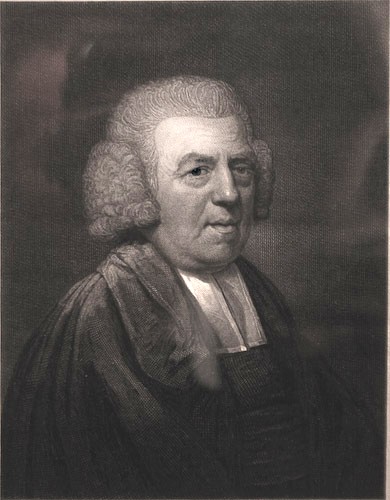
Many years ago, in 1779 (Sunday 3rd March, to be precise), John Newton preached a sermon at the parish church of Olney on Song of Solomon 1.3. Newton’s Works supply the notes for that message. He explains how perfume represents the name of Christ and how the fragrant oil was poured out in the life and death of Christ.
To accompany the sermon Newton wrote a hymn – ‘How sweet the name of Jesus sounds in a believer’s ear.’ The hymn by itself is a magnificent lesson in pastoral theology, showing how Christ may be known and his presence felt in every situation encountered by the believer.
Here then, in a single verse of Newton’s great hymn, lie the remedies for so many difficulties in the spiritual life and battles. Here are ten great ‘names’ of Christ.
Jesus! My shepherd, brother, friend,
My prophet, priest, and king;
My lord, my life, my way, my end,
Accept the praise I bring.
Reflecting on the names of Christ
1. Christ our Shepherd
To think of Christ the Lord as our shepherd warms every believing heart. We naturally think of Psalm 23: ‘The Lord is my shepherd; I shall not want. He maketh me to lie down in green pastures: he leadeth me beside the still waters…’ Echoing these words a Welsh poetess penned the well-known verse –
Wherever He may guide me,
No want shall turn me back;
My Shepherd is beside me,
And nothing can I lack:
His wisdom ever waketh,
His sight is never dim,
He knows the way He taketh,
And I will walk with Him.
Thinking of the shepherd gives the perfect verse for steps into the unknown, for surgeries, and for shocks and trials of all kinds.
We may say to ourselves: ‘I have the creator of the world, the Saviour, as my shepherd. He has my pathway firmly mapped out. He has my life in his eternal plan. He knows where he will take me, and what he will permit to happen. With such a shepherd, how can I be full of woes, or carried away by distractions? The Lord is my guide and guard, and I will trust him.’
We remember that to the sincere believer striving for holiness, the promise of Scripture is: ‘And the Lord shall guide thee continually’ (Isaiah 58.11).
I’ll bless the hand that guided,
I’ll bless the heart that planned,
When throned where glory dwelleth
In Emmanuel’s land.
There are today Christian books on guidance which abandon the old paths and say there is no such thing as guidance for believers. We may make all our own decisions, as long as they are moral.
But the believer brings all the major decisions of life to the Lord in prayer for wisdom and help. We are always available to the Lord and ready to ask his will. Only then may we say with sincerity: ‘The Lord is my shepherd.’
2. Christ our Husband
Christ is next represented as my ‘brother’, according to most hymn books today, but Newton originally wrote: ‘Jesus! My shepherd, husband…’ Subsequent revisers probably thought that men and women could both sing ‘brother’, but Newton found ‘husband’ used far more frequently in Scripture as a name for the Lord.
Speaking personally this writer prefers ‘husband’ for reflection and devotion, for Christ is a husband in the old-fashioned sense of the word. The Lord provides for me, purchased eternal life and Heaven for me, and gave himself for me. He offered his righteousness on my behalf, defends me, undertakes for me, and has my whole life and future in his hand. He is to me the perfect, the ideal husband, and he loves and cares with divine and everlasting love.
How can I drift from him? How can I do things that offend him? How can I ever feel abandoned or dismayed? ‘For thy Maker is thine husband; the Lord of hosts is his name; and thy Redeemer the Holy One of Israel; The God of the whole earth shall he be called’ (Isaiah 54.5).
3. Christ our Friend
The names ‘shepherd’ and ‘husband’ are already releasing their perfume in the soul, but the oppressed believer will gasp in wonder at the next thought: Jesus my ‘friend.’
Militant atheists think there can be no greater arrogance than this, that Christians claim to have God as their personal friend. Yet it is so. We can scarcely take it in ourselves. The Lord says that we are ‘The seed of Abraham my friend’(Isaiah 41.8).

What an astonishing thing it is that the creator of Heaven and earth, the second person of the Godhead, eternal in the heavens, the holy and all-powerful One, should say ‘Ye are my friends, if ye do whatsoever I command you’ (John 15.14.)!
In Psalm 25.14 David says, ‘the secret of the Lord is with them that fear him.’ Secret, here, means close consultation, and has been translated, ‘friendship’.
My Lord and Saviour has set his affection on me! He knows my every move, watching me from on high! His affection toward me is of the highest divine kind. His objective is to conform me to himself, and so he never blesses and warms my heart when I am in the wrong, but becomes a firm coach and teacher. Although I am so very far beneath him, my divine friend is utterly and unfailingly loyal, having promised, ‘I will never leave thee, nor forsake thee.’
Whatever my situation, the fragrance of Christ’s names has by now permeated my mind and heart so that all anxieties are shamed away, and the voices of faith and thanksgiving fill my entire inner being.
4. Christ our Teacher
Yet there is more to reflect on, for Newton goes on to claim Christ as his prophet or teacher, from whom he learns everything. He is the Word, and the Word is infallible.
Sometimes when we are young, we want to be able to explain every particle of biblical doctrine. Then we run into a problem, such as how to reconcile God’s absolute sovereignty with human ‘freedom’ to receive or reject salvation, or how God’s foreordination of all things fits with his holiness, kindness and justice. Suddenly we are disturbed. Until we have solved such problems we cannot be happy, and it may become a source of serious doubting and loss of assurance.
But we should say to ourselves, ‘Who do I think I am, to think that the faith stands or falls on whether I can understand everything immediately? Do I think I am a genius? Do I think I should fully grasp all the deep things of God while in spiritual infancy?’
Of course we cannot grasp everything overnight. But these areas of complexity are nothing by comparison with all that has become very clear to us as overwhelmingly true. And Christ the Lord is our prophet and teacher, and we must trust him where we do not yet fully understand. This is faith. This is what we are called to do.
Someone may protest that this is what Catholics call implicit faith (fides implicita), where you must believe all the doctrines of the church even where you do not know or understand them. Surely that is wrong. But it is not Catholic implicit faith to believe what Scripture says even when we do not fully understand. The difference is this: Catholics are required to believe what the church says, whereas Bible-believing Christians are trusting everything that the Word of God says. That difference is enormous.
We trust Christ, our prophet, and in time, one by one, the hurdles of mystery will be cleared, and the wonders of eternal truth will shine more gloriously. In the meantime you say to yourself, ‘I know that a vast amount has become clear to me through the anointing of conversion, and I trust my prophet, teacher and my Lord, for what remains.’
5. Christ our Priest
The next name or office of Christ in Newton’s hymn is that of priest – one who represents God to us, and us to God. He is, of course, our great high priest who gave the infinitely precious sacrifice of his own life for us, suffering indescribable agony to bear away our eternal punishment, and to purchase our redemption.
Our Saviour’s atoning death and his offered-up righteousness are the greatest drivers of our esteem and love for him. As our great high priest, who lived in unimaginable glory, immune from all suffering or loss, and incapable of feeling hurt or injury, he entered human flesh, partly that he may take and feel the punishment of our sin, and partly that he might be our sympathetic high priest. We are told in Hebrews 4.15:
‘For we have not an high priest which cannot be touched with the feeling of our infirmities; but was in all points tempted like as we are, yet without sin.’
We love the verse of Michael Bruce:
Our fellow-sufferer yet retains
A fellow-feeling of our pains,
And still remembers, in the skies,
His tears, and agonies, and cries.
Again we reflect – that the One who is Lord of all, the eternal Son of God, is our high priest.
6. Christ our King
The next names are those of ‘Jesus…my king’ and ‘my lord’. But what is the difference between king and lord? There is all the difference in the world. My king is high and lifted up. There is none greater than a king. Christ is to be admired and revered for his greatness and glory. We bow before him as almighty, holy, everlasting, infallible and altogether wise.
Some people go through life always searching for someone or something they can marvel and wonder at, while believers have the only worthy object of adoration – their heavenly king. In him we have found the ultimate purpose and meaning of life, and one day we shall see him and be lost in wonder, love and praise, with joy unspeakable and full of glory.
John Mason sings,
I’ve found the pearl of greatest price,
My heart now sings for joy.
Christ is the focal point of our worship, our acclamation and our Godward love.
7. Christ our Lord
However, he is also my ‘lord’ and here is an entirely different aspect of our relationship. We are in the palace, as it were, as personal servants to the sovereign, pledged to honour and adore, but he is also my lord, and I am here to carry out all his wishes, everything he desires, immediately.

As king I revere him for his greatness, but as lord I obey him unswervingly and with every ounce of my being. If I am carried away with some entirely earthly pursuit, or my own interests, and he tells me to stop it, I must do so immediately. If his Word tells me something is not expedient for me, I give it up today, this instant. He is my Lord, and I am his, to do his bidding.
The nominal or ‘cultural’ Christian admires the king (at least after a fashion, or emotionally) but feels no obligation to obey. The true convert is challenged and convicted by his Lord’s Word.
If we are confronted by key decisions, our work, our career, our location, our life’s partner, we seek our Lord’s guidance. We do not listen to those who say, ‘It’s your choice; don’t seek guidance.’
When thinking through our plans for the day or week before us, we remember that our first obligation is to our Lord, and we commit our way in prayer to him. With Frances Havergal we pray:
My life I bring to thee,
I would not be my own;
O Saviour, may I be
Thine ever, thine alone!
My heart, my life, my all, I bring
To thee, my Saviour and my King.
Christ our life, our way, our end

We have not left space for the names, ‘My life, my way, my end.’ Of course Christ is my life, the source of spiritual and eternal life, and the great purpose and motive for every day. I now live in him and by him.
Christ is also my way – ‘Thy way, not mine, O Lord’ is our daily motto and prayer. ‘Lord, deliver us from worldliness and fleshly things!’ His pathway is a road under constant enemy sniper fire, beset by loudspeakers amplifying across our path alternating enticements and insults to hinder our progress. But this is Christ’s road, and we walk it in the light of Isaiah 35.8-9: ‘And an highway shall be there, and a way, and it shall be called The way of holiness; the unclean shall not pass over it; but it shall be for those: the wayfaring men, though fools, shall not err therein. No lion shall be there, nor any ravenous beast shall go up thereon, it shall not be found there; but the redeemed shall walk there.’
Finally, Christ is our end, and we keep him in view, watching and waiting and praying for the greatest conclusion of the greatest love story, the coming and revealing of the Lord, and the marriage supper of the Lamb.
* * *
Here, then, are suggested reflections upon the names and offices of Christ, that will lift and strengthen the soul in all the rigours and perils of life.
Jesus! my Shepherd, Husband, Friend,
My Prophet, Priest and King;
My Lord, my Life, my Way, my End,
Accept the praise I bring.
In this article we have not tracked John Newton’s sermon, but note that in a postscript, he writes of four events in the believer’s life when this aroma of the name is particularly precious.
First, at the time of conversion;
Secondly, in any time of distress and trouble;
Thirdly, at the hour of death, and
Fourthly (and especially) at the Lord’s Supper.
Surely in these names is the very sense of his presence, and the aroma of his guardian power and love. Many, many years ago this writer learned them for meditation, prayer and praise in every time of need or trial.
Notes
Article derived from a Bible Study preached by Dr Peter Masters at the Tabernacle, 24th December 2025.
The text, Song of Solomon 1.3, and subject for this message was ‘inspired’ by an extract from John Newton’s diary published by Marylynne Rouse, in her superbly informative quarterly newssheet for the John Newton Project.
Audio digitally generated, using the voice of Matthew Wainwright. All rights reserved.