









Under the Shadow of China’s Regulations on Religious Affairs

In the People’s Republic of China, house churches, or family churches, are Protestant assemblies that operate independently of the state-sanctioned Three-Self Patriotic Movement and China Christian Council.
They represent a tradition of independent churches that dates back to the 1950s and that have remained outside the control of the Chinese Communist Party (CCP).
Formation of urban house churches
China’s rapid urbanisation during the 1980s and 1990s resulted in massive migration from rural areas to urban centres and, at the same time, witnessed the rise of urban house churches. Some of these house churches developed through migrant worker communities and among university students. Other new communities emerged among urban intellectuals and entrepreneurs.
While house churches originally operated independently of one another, a number of house church networks have since developed, with some headquartered in Henan and Zhejiang provinces. Some of these networks have even sent missionaries across the country.
Following the beginning of the Hu Jintao–Wen Jiabao Administration (2002–2012), China’s house churches increasingly operated more openly. Some were able to establish church buildings and display religious symbols, becoming increasingly similar in outward appearance to state-sanctioned churches.
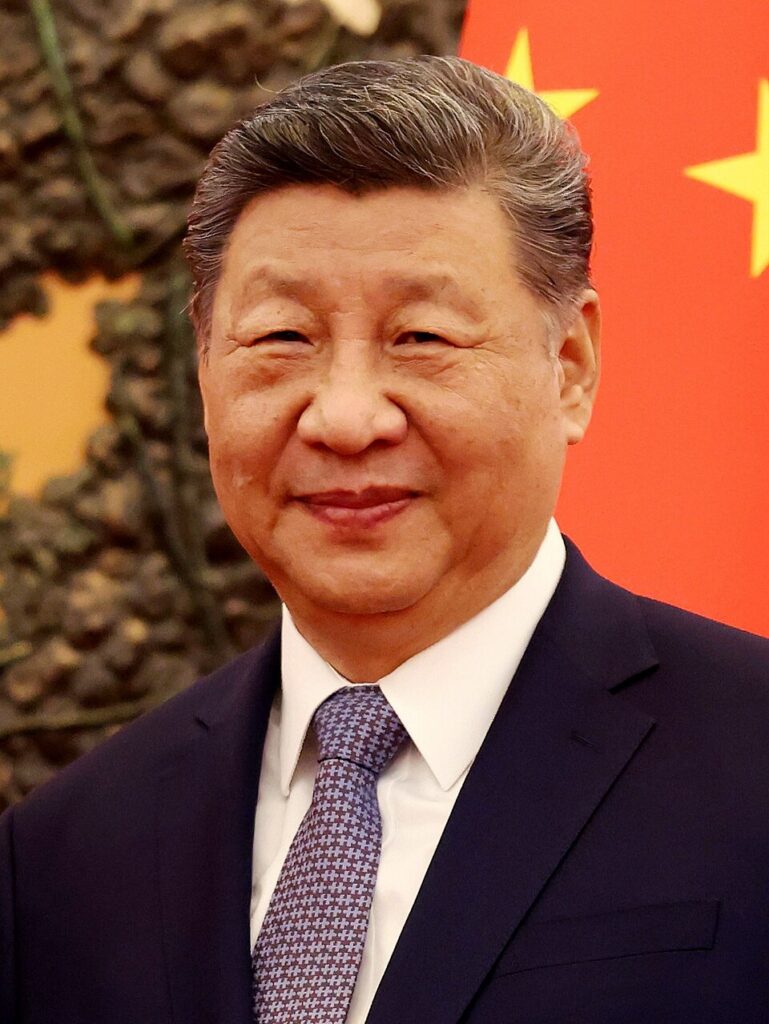
Since 2012, Xi Jinping has served as General Secretary of the CCP and Chairman of the Central Military Commission, and, since 2013, as President of China and Chairman of the State Central Military Commission.
It is widely acknowledged that China’s house churches have grown, with some estimates suggesting that they now have tens of millions of attendees across the country. They have also demonstrated a degree of national-level influence. For example, Christians organised relief efforts following the devastating 2008 Sichuan earthquake, at a time when the government was criticised for its slow response to the disaster.
Regulations on Religious Affairs
In 2018, the CCP began to introduce a series of new regulations concerning religious affairs. One of the most important was the Regulations on Religious Affairs (宗教事务条例, Zongjiao Shiwu Tiaoli), which was revised and approved by China’s State Council on 14 June 2017 and came into force on 1 February 2018.
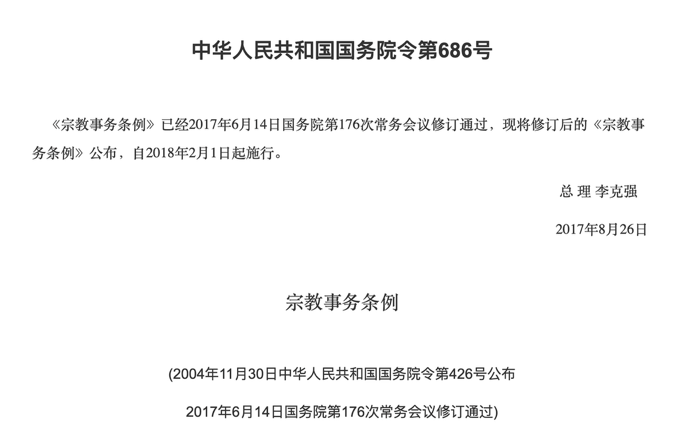
Article 7 of Chapter II of the Regulations on Religious Affairs, concerning religious organisations, clearly stipulates that the establishment, alteration, and dissolution of religious organisations must be registered with the relevant Chinese authorities in accordance with the provisions governing the administration of social organisations.
This legal requirement for registration sends a clear signal to house churches that they are expected to submit to the same regulatory framework and supervision as state-sanctioned churches (or the Three-Self Patriotic Churches).
Three-Self Patriotic Churches
The Three-Self Patriotic churches are supervised by the CCP and remain subject to close monitoring by the state authorities. One significant restriction is that children are generally not permitted to attend church services.
These state-sanctioned churches also face restrictions regarding the content of their preaching. For example, their preaching tends to focus on biblical moral values, while topics such as human sinfulness, repentance, final judgement, and the need for salvation through the Lord Jesus Christ often receive less emphasis or are avoided altogether.
It is also important to recognise that many Three-Self churches are very active in charitable and community work.
Impact of regulations on house churches
The implementation of the Regulations on Religious Affairs since 2018 has had a significant chilling effect on house churches throughout China.
Although faithful and theologically sound house churches across the country continue to meet and worship the Lord, they have become increasingly cautious about inviting new friends and seekers to attend worship services in person, in an effort to avoid attracting the attention of the police or undercover officers sent by the authorities.
The Regulations have also made the publishing ministries of these house churches particularly challenging. Many Chinese publishers that had previously been legally granted ISBNs and had published books containing Christian apologetic literature, including biographies of Christian leaders throughout history, have stopped reprinting these titles.

Vanity of Vanities – The Emptiness of Life Without God
Dr Peter Masters
Available in Chinese from the Tabernacle Bookshop
God’s work continues amongst opposition
However, we are very encouraged to learn that, by God’s grace, many house churches in China continue to enjoy peace and safety and have been blessed with the ongoing conversion of true believers, even under the shadow of the Regulations on Religious Affairs. The Almighty God has also opened up new ways for doctrinally sound Reformed Christian books to be printed and distributed in Chinese.
Please continue to pray for our brothers and sisters who faithfully serve our Lord in independent house churches in China, and in particular, for renewed opportunities to publish and circulate Reformed Christian literature in China.
Visit the Chinese language version of the Metropolitan Tabernacle website: Metropolitan Tabernacle (Chinese)
Photo of Xi Jinping by Simon Dawson / No 10 Downing Street – Prime Minister Keir Starmer visits China, CC BY 4.0, https://commons.wikimedia.org/w/index.php?curid=183334522